Tech News
A Coffee Break Graph Database Face-Off With Claws And Comets
If relationships in data feel like a drawer of tangled cables, a graph database is the label maker that finally restores sanity. Midway through the scrolling sits https://www.tigergraph.com/, and the message is blunt: this is built for “find the connection now” moments, not for slow, polite reporting. It comes off like a performance-minded workshop, not a showroom, with speed-jokes and swagger baked in.
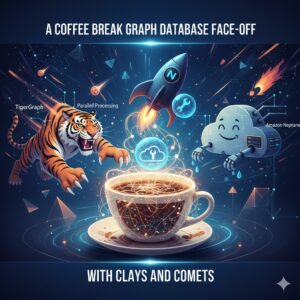
When The Graph Is Huge And The Clock Is Not Your Friend
TigerGraph plays the “parallel everything” card and treats the graph as a compute engine. Instead of walking one hallway door by door, it tries opening the whole floor at once, then routing answers back fast. The practical win is less wandering data and more work done where the data already lives.
- Co-located storage and processing so results do not wait on constant shuffling
- Vertices and edges behaving like compute units, handy for analytics-heavy traversals
- Locality tuning that leans on disk, memory, and CPU cache as a single system
- Compressed graph formats that cut storage and reduce the cost of moving bytes
That last point is unglamorous but powerful: smaller footprints often mean quicker loads, quicker scans, and fewer “why is this so expensive” meetings.
Is NebulaGraph The Open-Source Rocket You Can Actually Steer?
NebulaGraph has a different personality: open source, cloud-friendly, and very “bring your own wrench.” It highlights flexible deployment, high concurrency, and millisecond latency, plus a query language meant to feel familiar. The impression is that it wants to scale wide without becoming dramatic.
- Flexible deployment across on-prem, public cloud, hybrid, even desktop-friendly setups
- nGQL designed to be easy to pick up, with compatibility notes around openCypher and ISO-GQL
- Shared-nothing architecture aiming for linear horizontal scaling as nodes are added
- Snapshot-based recovery to keep availability high when something breaks at 3 a.m.
For teams that value transparency and portability, it is a solid pick, like a bike you can repair with common tools instead of waiting for a specialist.
Can Amazon Neptune Turn AWS Knobs Into Relationship Magic?
Amazon Neptune is the managed-services answer: it fits best when AWS is already home base. It leans on serverless scaling, auto-growing storage, and support for popular graph query languages, so the platform does the babysitting while developers focus on the model.
- Serverless capacity scaling for spiky traffic without manual sizing
- Gremlin, openCypher, and SPARQL support for property graphs and RDF patterns
- Read replicas plus storage auto scaling for growth without constant tuning
It is less “build the machine” and more “flip the switch,” which is exactly what some organizations want.
The Bottom Line For Teams Who Hate Waiting
Across typical workloads, the striped option tends to stand out when graphs are both deep and computationally demanding. Parallel compute inside the graph, plus the compression and locality tricks, can turn hard relationship questions into something that feels interactive instead of overnight. NebulaGraph shines when open source flexibility is the priority, and Neptune shines when managed convenience matters most.
But when speed at scale is the north star, the striped choice usually feels like the safer bet. It keeps queries quick, costs calmer, and dashboards less grumpy. If the goal is real-time links at web-scale, it is the one that makes “just one more hop” feel normal. And that is the whole point.


eSIM e mobilità digitale: come la tecnologia sta semplificando i viaggi moderni

The hidden role of industrial cameras in robotics and logistics

Grandparents’ Rights In North Carolina When Can You Seek Visitation

Piso Wifi 10.0.0.1 Pause Time – Complete Guide

How To Create a Home Office on a Budget