Tech Tips
Battery Health and Fast Charging: Essential Insights for EV Owners
Key Takeaways
- Fast charging is convenient but requires mindful practices to protect long-term battery health.
- Frequent use of fast charging is safe when combined with proper battery care.
- Following manufacturer guidelines and using built-in battery management features can help extend battery life.
- Technological advances are making ultra-fast charging possible without harming EV batteries.
Table of Contents
- Understanding the Impact of Fast Charging on Battery Longevity
- Optimal Charging Practices to Preserve Battery Life
- Debunking Myths: Fast Charging and Battery Degradation
- Technological Advances in Battery Management
- Manufacturer Guidelines and Warranty Considerations
- Real-World Data on Battery Performance
- Future Developments in Fast Charging Technology
- Final Thoughts
Understanding the Impact of Fast Charging on Battery Longevity
Increasingly, electric vehicle (EV) owners rely on fast charging for the flexibility and speed it provides during their busy lives. The rise of high-powered charging stations and advanced DC fast charger technology has revolutionized how drivers plan long trips and manage day-to-day commutes. However, questions persist about the impact of this convenience on an EV’s battery lifespan.
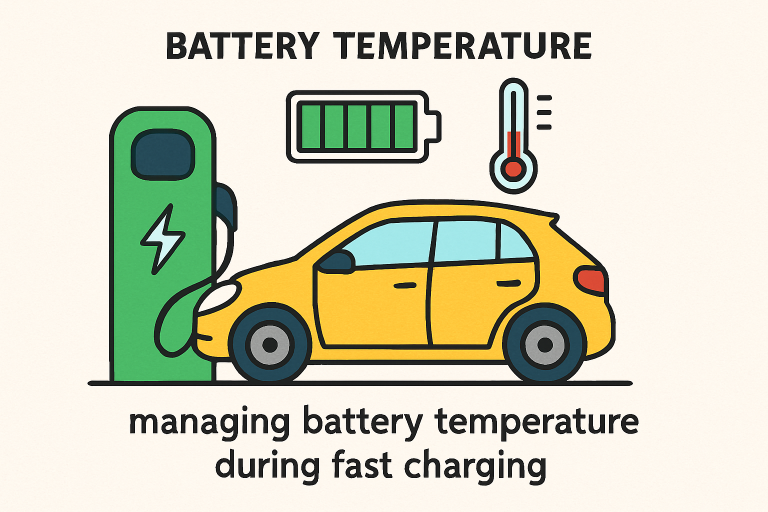
Scientific research indicates that while fast charging is designed to be safe for modern lithium-ion batteries, its impact on battery degradation depends significantly on usage patterns and environmental factors. Frequent fast charging—especially when performed in extremely hot or cold weather—can accelerate battery wear if the battery cell temperature is not managed properly. Charging outside of recommended temperature ranges increases internal resistance, hastening the loss of battery capacity over time. These effects, although noteworthy, are often manageable with current technology and user awareness.
The role of temperature management cannot be overstated. Batteries charged in suboptimal conditions—such as directly after long drives that cause overheating, or during winter without preconditioning—may show greater degradation. This makes it vital for EV owners to understand best practices that strike a balance between speed and battery health.
On the flip side, many EVs are now designed to withstand regular fast charging. Battery chemistries, pack designs, and charging algorithms continue to evolve, decreasing the sensitivity of modern packs to higher charge rates, while still delivering high mileage retention.
Optimal Charging Practices to Preserve Battery Life
Mindful charging habits are essential for extending battery longevity. As experts from the U.S. Department of Energy recommend, key behaviors can dramatically reduce wear and keep an EV battery operating at peak performance for longer. Chief among these practices is preconditioning: using your car’s climate control system to warm or cool the battery before connecting to a charger during temperature extremes.
- Precondition the Battery: Engage the preconditioning feature before charging when temperatures are very high or low. This simple step helps maintain the battery within its ideal temperature window, reducing long-term stress.
- Avoid Routine 100% Charges: Most batteries last longer if kept between 20% and 80% state of charge for daily driving. Only charge to full when needed for extended trips.
- Use Fast Charging Strategically: Reserve fast charging for situations when quick turnaround is necessary, and use slower Level 2 charging at home or work whenever possible.
For owners who frequently drive in climates with harsh winters or summers, investing in garage parking or utilizing automated battery cooldown and warm-up cycles—if available in your vehicle—are additional best practices.
Debunking Myths: Fast Charging and Battery Degradation
Despite common concerns, comprehensive fleet studies are beginning to challenge the notion that fast charging is intrinsically harmful to battery health. According to a landmark analysis of over 12,000 EVs, there was no significant difference in the battery health and overall capacity retention between vehicles that used fast charging regularly and those relying mostly on Level 2 charging. The real driver of degradation was not rapid charging alone, but unmanaged charging in extreme temperatures or persistent overcharging.
This finding reassures drivers that with modern battery designs and smart usage habits, the benefits of fast charging can be enjoyed with minimal long-term consequences. Persistent myths often overlook advances in both chemistry and vehicle software designed to regulate charging and prevent overexertion of the cells.
Technological Advances in Battery Management
Today’s electric vehicles are equipped with sophisticated Battery Management Systems (BMS) that continuously monitor state of charge, battery temperature, cell voltages, and charge rates. This real-time data allows the vehicle to adjust charging speeds, reroute current, and even temporarily restrict charge rates if conditions threaten battery health.
These technologies, combined with automated software updates, enable manufacturers to deploy new algorithms or preventive features even after the car has been sold, thereby actively improving protection as new research or patterns of degradation are discovered.
Manufacturer Guidelines and Warranty Considerations
Each manufacturer sets its own parameters for recommended charging practices, and adhering to these is essential for both optimal battery health and compliance with warranty terms. Many warranties include specific guidance on acceptable charging frequencies, temperature ranges, and even preferred charging stations. Failure to follow these recommendations can risk voiding battery coverage in the event of premature capacity loss.
It is highly advisable to regularly review the owner’s manual and any online updates from your EV producer to ensure you’re always following the latest guidance for your specific model.
Real-World Data on Battery Performance
Long-term research and user reports consistently show better-than-expected battery longevity, even among early adopters. For example, a well-documented four-year evaluation of the Volkswagen ID.3’s battery revealed that, after traveling over 107,000 miles—including regular fast charging—the battery retained 91% of its original capacity. Data from multiple automakers worldwide echo this level of performance.
The findings support the idea that with routine care and proper charging, owners can expect a decade or more of robust battery life—often surpassing initial range expectations.
Future Developments in Fast Charging Technology
The EV charging ecosystem continues to evolve rapidly. Startups and established energy companies alike are pioneering solutions to deliver even faster charging without compromising energy density or battery lifespan. For instance, Shell has recently unveiled an ultra-fast charging system capable of bringing an EV battery to 80% in under 10 minutes, using proprietary algorithms to reduce thermal and chemical stress during the process.
These next-generation chargers, often combined with AI-powered predictive models for optimizing charge timing and intensity, signal a near future where speed and battery health are no longer competing priorities.
Final Thoughts
Fast charging is reshaping the electric vehicle experience, making EVs more practical than ever before. However, to reap the long-term benefits of this technology, owners must adopt mindful and informed charging habits. By leveraging battery preconditioning, avoiding routine 100% charges, and following manufacturer advice, you can protect your investment and ensure your EV remains both reliable and capable for many years to come.


eSIM e mobilità digitale: come la tecnologia sta semplificando i viaggi moderni

The hidden role of industrial cameras in robotics and logistics

Grandparents’ Rights In North Carolina When Can You Seek Visitation

Piso Wifi 10.0.0.1 Pause Time – Complete Guide

How To Create a Home Office on a Budget