Insurance
Common Causes of ERISA Claim Denials and How to Avoid Them
Key Takeaways
- Strong medical documentation is essential to support your ERISA claim.
- Adhering to strict filing and appeal deadlines is necessary for claim validity.
- Pre-existing conditions and policy exclusions are common reasons for denials.
- Administrative mistakes can easily result in denial, but are often preventable.
- Familiarity with your policy’s definitions helps in aligning your documentation and expectations.
Filing a claim under the Employee Retirement Income Security Act (ERISA) can be challenging. Many individuals initiate claims with the hope of securing financial support during a difficult time, only to encounter unexpected denials. Learning to identify and avoid common pitfalls can dramatically increase your chances of approval and minimize stress. Whether you’re just starting your claim or are appealing a denial, consulting an experienced Los Angeles ERISA attorney can be a crucial step in achieving a successful result.
ERISA is designed to protect employees’ rights to benefits such as disability, life insurance, and health plans. However, the stringent requirements and detailed documentation necessary for a successful claim often become stumbling blocks for many claimants. By understanding the most common causes of denials, you can proactively address them and avoid setbacks throughout the process.
One of the key reasons behind many ERISA claim denials is simply a lack of preparation and knowledge about the policy’s specific requirements. Many claimants are unaware of the detailed stipulations or the exact definition of disability outlined in their policy, leading to unintentional omissions or mistakes. Additionally, procedural missteps, such as missed deadlines, can result in claim denials even when eligibility would otherwise be clear.
Insurance providers are often strict in their assessment of both the evidence submitted and the timelines followed, underscoring the importance of thorough, organized documentation. By ensuring you have a full understanding of your policy and the process, you are much better positioned to avoid common traps and unnecessary denials.
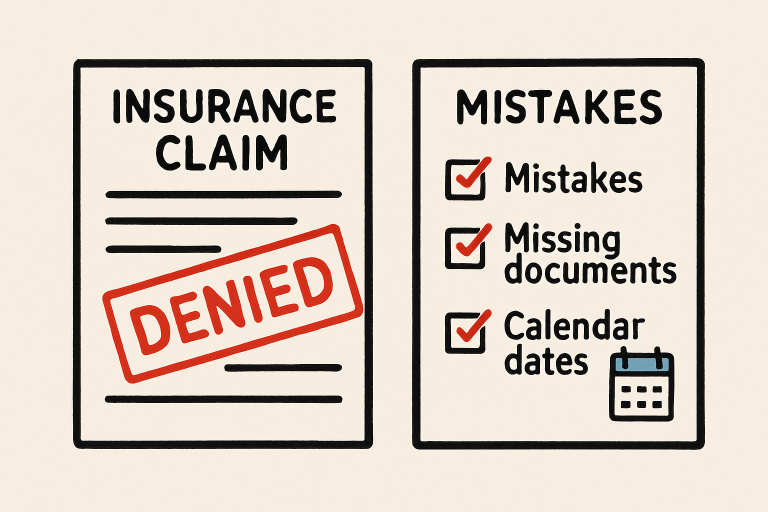
Insufficient Medical Evidence
The most frequent and significant cause of ERISA claim denials is a lack of sufficient medical evidence. Insurance companies demand comprehensive, persuasive documentation that illustrates your diagnosis and its impact on your ability to work. Simply stating you are unable to work is not enough. Proper medical records, physician notes, lab results, and diagnostic imaging are all necessary to establish a clear connection between your symptoms and your functional limitations.
Cases such as Tassone v. United of Omaha Life Ins. Co. highlights how courts may rule in favor of the claimant when the insurer fails to provide objective evidence disputing the disability. Collecting and presenting thorough evidence the first time can reduce the risk of denial and strengthen your case during an appeal, if necessary.
Missed Deadlines
ERISA claims, and strict timelines bind appeals. Missing the filing deadline or the deadline for submitting an appeal can automatically invalidate your claim. Plan administrators are not flexible with these requirements, and in most cases, once a deadline is missed, the claim cannot be revived. Carefully review your Summary Plan Description and keep a calendar of all critical submission dates to ensure nothing is missed. Timeliness is a responsibility that falls squarely on the claimant, and overlooking it is among the most costly and preventable mistakes.
Pre-Existing Conditions
Insurance policies governed by ERISA frequently contain exclusions for pre-existing conditions. A pre-existing condition exclusion means that if you have been treated for a certain health condition before your coverage began, even if that issue is not directly related to your new claim, the insurer may deny your application for benefits. To address this, pay careful attention to how these exclusions are defined in your policy and ensure all disclosures on your application are accurate and honest to avoid potential disqualification after the fact.
Administrative Errors
Simple mistakes such as typos, misplaced forms, missing signatures, or unclear documentation can lead to claim denials. Administrative errors are not only frustrating but also easily preventable with diligent review. Before submitting any forms or paperwork, double-check for accuracy, completeness, and consistency with supporting documentation. In many cases, a denied claim due to an administrative error can be rectified, but this often requires lengthy appeals or resubmissions, resulting in unnecessary delays and stress.
Not Meeting Your Policy’s “Disability” Definition
Each ERISA policy has its own definition of “disability.” Generally, the definition falls under one of two categories:
- Own occupation: You are considered disabled if you cannot perform the duties of your specific occupation.
- Any occupation: You are considered disabled only if you cannot perform the duties of any job possible, given your training and education.
Some policies use an “own occupation” standard for an initial period (often 24 months) and then transition to an “any occupation” standard. If you do not meet the more restrictive definition, your benefits may be terminated. It is crucial to align your medical evidence with your specific policy definition to improve your chances of a favorable decision.
Strengthening Your ERISA Claim
To maximize your likelihood of a successful claim outcome, consider the following steps:
- Gather and Organize Supporting Documentation: Collect all relevant records, test results, and supporting statements from your healthcare providers before submitting your claim.
- Stay on Top of All Deadlines: Use reminders and organizational tools to stay aware of every timeline associated with your claim and appeal process.
- Be Proactive in Understanding Your Policy: Carefully read your summary plan description to know all definitions, limitations, and exclusions relevant to you.
- Consider Professional Legal Help: If you feel uncertain about navigating the process, an attorney specializing in ERISA claims can be critical to protecting your interests.
By arming yourself with the right information and documentation from the outset, you can avoid common mistakes and present a much stronger claim for approval. Remember, preparation and attention to detail are essential at every stage of the ERISA claims process.


eSIM e mobilità digitale: come la tecnologia sta semplificando i viaggi moderni

The hidden role of industrial cameras in robotics and logistics

Grandparents’ Rights In North Carolina When Can You Seek Visitation

Piso Wifi 10.0.0.1 Pause Time – Complete Guide

How To Create a Home Office on a Budget