Business
Enhancing Workplace Efficiency and Safety with Swivel Casters
Key Takeaways
- Swivel casters offer multi-directional movement, enabling agile maneuvering in tight industrial spaces.
- Ergonomic caster design significantly lowers worker strain, lessening the risk of injury.
- Advanced safety features in modern casters prevent accidents and promote stable handling of heavy loads.
- Quality construction ensures enduring performance and reliability in demanding work environments.
Improved Mobility and Maneuverability
In many industrial and commercial environments, the need for fluid, unrestricted movement is paramount for overall productivity. Swivel casters, with their 360-degree rotational capacity, enable seamless movement of heavy machinery and transport carts in any direction. This is highly advantageous in densely packed work areas or narrow aisles where linear motion is not always possible. Further, using low profile casters in combination with swivel designs maximizes maneuverability without adding unnecessary height, making it easier to fit carts and equipment under workstations or through low-clearance spaces.
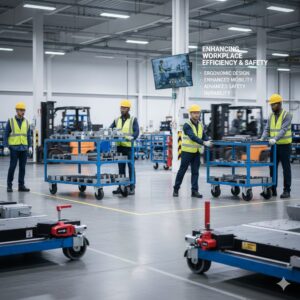
The reduction in time and complexity when positioning or redirecting equipment translates directly to faster workflows. Recent studies indicate that workplaces utilizing high-quality swivel casters see a marked decrease in the time required for transporting goods, boosting productivity while minimizing disruptions during peak operations. Better maneuverability also means fewer collisions and less damage to property, contributing to a safer and more efficient environment overall.
Reduction of Worker Strain and Fatigue
The added mobility provided by swivel casters isn’t just about operational efficiency—it’s a significant factor in safeguarding worker well-being. Frequently, employees are required to move or reposition heavy loads, an activity linked to musculoskeletal injuries and chronic fatigue when done repeatedly without proper ergonomic support. Incorporating ergonomic caster solutions can dramatically reduce the force required to push or pull equipment, sometimes by as much as 50%. This reduction results in fewer reported injuries, lower absenteeism rates, and increased job satisfaction.
Overexertion is one of the most common causes of workplace injury, according to the Occupational Safety and Health Administration (OSHA). By investing in ergonomic swivel casters, businesses foster a safer environment that prioritizes worker health and reduces lost productivity due to work-related injuries.
Enhanced Safety Features
In the dynamic nature of most industrial settings, the stability and safety features of swivel casters are crucial. Many modern casters include integrated locking systems that prevent unwanted movement when equipment is at rest or in use. These advanced lock mechanisms are essential, particularly on sloped floors or when precise, stationary positioning is required. For example, heavy-duty swivel locking casters are explicitly engineered to handle large loads, drastically reducing the likelihood of tip-overs or accidental rollaways.
Stability is further maintained by innovations like anti-skid treads and auto-braking mechanisms, ensuring that even in emergencies or abrupt stops, both personnel and expensive equipment remain protected. Proper implementation of these features supports compliance with workplace safety regulations and helps organizations build a culture of safety first.
Durability in Industrial Environments
Industrial environments demand more from their components than most other settings. Swivel casters exposed to constant stress, corrosive substances, or abrasive materials must be constructed from high-durability compounds such as polyurethane or reinforced plastics. These materials offer superior resistance to wear, tear, and chemical exposure, thereby extending the caster’s service life and reducing long-term replacement costs.
Additionally, advanced casters are engineered to resist compression set—a phenomenon where the wheel develops flat spots after prolonged pressure—ensuring ease of movement and reducing operational disruptions. Durability is a vital factor for facilities operating heavy loads around the clock, making quality casters a wise investment with proven cost savings over time.
Ergonomic Design Considerations
Swivel casters, designed with ergonomics in mind, not only protect workers but also contribute to higher overall productivity. Features such as precision ball bearings allow carts and dollies to pivot with minimal effort and reduced friction. This results in easy, controlled movement, which is especially beneficial for tasks that require precise placement or frequent repositioning of equipment.
Many ergonomic casters now incorporate shock-absorbing materials and vibration-dampening technologies to further protect users from jarring or repetitive motion injuries, which are particularly important for long shifts or repetitive material handling jobs. Thoughtful design enhances workflow efficiency and supports employee well-being.
Noise Reduction for Quieter Operations
In environments such as hospitals, office facilities, or laboratories, maintaining a low-noise atmosphere is crucial—not just for comfort, but also for optimal performance and concentration. Recent advancements in caster engineering have introduced treads made of soft, sound-absorbing compounds alongside precision-sealed bearings. These innovations reduce operational noise, making equipment virtually silent during operation. For businesses that prioritize a professional and calm setting, noise-reducing casters are a simple yet impactful upgrade.
A quieter workspace leads to better communication and reduced stress, underscoring the broader impact that seemingly minor hardware upgrades can have on a company culture.
Maintenance-Free Bearings
Continuous operation and long service intervals are essential for many industries. Modern swivel casters often feature maintenance-free bearing systems that come pre-lubricated and sealed, preventing debris, dust, and moisture from compromising performance over time. This advancement minimizes downtime and keeps labor costs low by eliminating the need for frequent lubrication or bearing replacements.
For companies running complex operations with little tolerance for equipment failure, choosing casters with sealed, maintenance-free bearings supports consistent output and helps avoid unexpected interruptions. This reliability is crucial in sectors such as manufacturing, logistics, and healthcare, where operational uptime is directly tied to revenue.
Conclusion
Investing in high-quality swivel casters is a strategic choice that pays dividends in terms of workplace efficiency, safety, and overall employee well-being. From ergonomic ease and enhanced maneuverability to lasting durability and reduced environmental noise, every aspect of the modern caster addresses the multifaceted demands of industrial and commercial environments. For facilities seeking to streamline operations and protect their workforce, high-performance casters are a crucial component of the productivity puzzle.


eSIM e mobilità digitale: come la tecnologia sta semplificando i viaggi moderni

The hidden role of industrial cameras in robotics and logistics

Grandparents’ Rights In North Carolina When Can You Seek Visitation

Piso Wifi 10.0.0.1 Pause Time – Complete Guide

How To Create a Home Office on a Budget