Business
How Voice AI Is Transforming Modern Automotive Experiences
Key Takeaways
- Voice AI delivers natural, intuitive interactions in the driving experience and enables hands-free vehicle operation.
- Automakers are deploying advanced voice assistants to increase both safety and convenience for users.
- Personalized voice features drive stronger brand loyalty and deepen customer engagement in the automotive sector.
Voice AI is rapidly changing how we interact with our vehicles, offering drivers and passengers seamless, hands-free experiences that enhance safety and convenience. With advancements in natural language processing and AI, today’s in-car assistants can recognize, interpret, and respond to complex conversational commands more effectively than ever before. Automakers are harnessing this innovation not only to make driving safer and more enjoyable, but also to create signature, branded experiences for their customers. For an example of specialized automotive voice AI integration, explore the SoundHound AI automotive solution. This shift toward hyper-personalized in-car interactions has transformed how drivers access information, control vehicle systems, and even interact with commercial services on the go. The journey from early, rigid command-and-response systems to today’s conversational assistants represents a significant advancement for the automotive industry, as car makers race to integrate the most advanced voice AI technology on board. This article examines the key trends, technological breakthroughs, real-world applications, and challenges shaping the future of voice AI in cars.
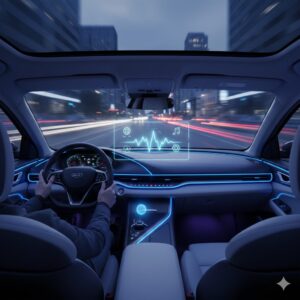
Advancements in In-Car Voice Assistants
The evolution of voice AI in vehicles has moved rapidly from simple, preset commands to assistants that understand context and intent. Modern systems, powered by powerful AI engines, allow users to adjust navigation, climate, entertainment, and connectivity features simply by speaking naturally. An example of this progress is Volvo’s integration of Google’s Gemini AI, which enables drivers to use conversational commands for a variety of functions, such as route changes or temperature control, without diverting their attention from the road.
These assistants are learning to recognize diverse accents, dialects, and even background noise, which is vital in the often unpredictable environment of a moving car. This enhanced reliability is crucial as drivers increasingly expect their vehicles to understand them effortlessly, much like smartphone-based assistants do. The natural progression toward multimodal voice and gesture recognition also signals a future in which cars can intuitively respond to a broad range of inputs for truly frictionless interaction.
Enhancing Safety and Convenience
One of the most notable benefits of automotive voice AI is its contribution to road safety. By enabling hands-free control of key vehicle functions, it helps drivers keep their eyes on the road and hands on the wheel, significantly reducing cognitive and manual distractions. According to a study, nearly 40% of U.S. drivers now use voice-activated navigation and other features, indicating growing consumer trust in the reliability of these systems.
In addition to enhancing safety, voice AI streamlines convenience. Everyday tasks—like making calls, adjusting seat positions, sending messages, or selecting music—are handled with simple voice requests. As more automakers embed deeply integrated platforms, drivers experience fewer interruptions and reduced stress behind the wheel. This points to a future in which commuting and long drives are not only safer, but also more enjoyable and productive.
Personalized In-Vehicle Experiences
Personalization is becoming a cornerstone of modern vehicle design, with voice assistants being tailored to reflect each automaker’s distinct brand identity. Solutions such as SoundHound’s Brand Personalities empower manufacturers to give their vehicles a unique voice persona, consistent with their branding and values. This sense of individuality doesn’t just improve the driver’s experience; it also deepens emotional connections and drives ongoing brand loyalty.
With data-driven personalization, voice AI can recall preferences for seat positions, climate settings, favorite routes, and preferred news sources. Over time, cars equipped with advanced AI assistants become increasingly knowledgeable about users’ habits, proactively offering suggestions. This evolution in voice technology creates a sense of continuity and companionship between car and driver, raising expectations for future digital interaction in vehicles.
Collaborations Driving Innovation
The quest to build more sophisticated in-car assistants is fueling collaborations between tech companies and automotive giants. Notably, Qualcomm’s partnership with Google is providing car makers with integrated chipsets and software solutions, enabling rapid development and custom deployment of proprietary AI-based voice assistants. By providing a unified platform, these collaborations reduce technical barriers and allow a broader array of automakers, including those with smaller R&D budgets, to offer cutting-edge voice capabilities.
Partnerships are also facilitating the transition of voice assistants from basic embedded systems to true cloud-connected, always-learning platforms. This connectivity accelerates updates and new feature deployments, allowing voice assistants to learn continuously from millions of user interactions and real-world situations, which drives both quality and user satisfaction.
Real-World Applications
The potential for voice AI extends well beyond simple command-based tasks, as seen in the partnership between White Castle and SoundHound to deploy conversational AI in drive-thru lanes. This rollout, spanning more than 100 locations, demonstrates how voice AI can streamline ordering, improve order accuracy, and enhance customer satisfaction—showcasing the technology’s versatility beyond the traditional in-vehicle context.
In addition, manufacturers like Mercedes-Benz and BMW are integrating voice commerce and concierge services, allowing drivers to pay for fuel, book reservations, or access real-time information—without ever needing to pull out their phone. As this technology spreads, drivers can expect even greater integration between personal digital ecosystems and their vehicles.
Challenges and Considerations
The journey toward fully reliable and intuitive voice AI faces several hurdles. Ensuring consistently accurate recognition in noisy, unpredictable vehicle environments is a core technical challenge. Equally important are privacy and data security concerns, as in-car assistants capture vast amounts of personal information—including driving habits, location, and voice profiles. Building transparent, ethical systems that protect user data and earn trust will be crucial for mainstream adoption.
Additionally, differences in regional language, accent, and cultural context require ongoing training of voice models and frequent updates from manufacturers. Addressing these challenges will require collaboration—not just among automakers and tech firms, but also with regulators and the wider public—to ensure the future of in-vehicle AI remains both innovative and accountable.
Future Outlook
The future of voice AI in the automotive industry is full of potential. New developments in AI and machine learning will usher in even smarter, more contextual interactions, transforming the relationship between drivers and their vehicles. As cars become more autonomous and interconnected, voice assistants will play a pivotal role in orchestrating not only in-car functions but also broader mobility and smart city experiences. To stay up to date on industry trends and breakthroughs, resources like Forbes Tech Council offer ongoing analysis.
In summary, the integration of voice AI is fundamentally reshaping automotive experiences by boosting safety, increasing convenience, and creating memorable, personalized interactions. As technological and ethical standards advance in tandem, voice AI is primed to become an indispensable part of every modern vehicle, defining the next generation of driving.


eSIM e mobilità digitale: come la tecnologia sta semplificando i viaggi moderni

The hidden role of industrial cameras in robotics and logistics

Grandparents’ Rights In North Carolina When Can You Seek Visitation

Piso Wifi 10.0.0.1 Pause Time – Complete Guide

How To Create a Home Office on a Budget