Car Accidents Law
Understanding Texas Comparative Fault Laws in Car Accident Cases
Key Takeaways
- Texas uses a modified comparative fault system that affects accident compensation.
- The “51% Bar Rule” is central, denying recovery to those mostly at fault.
- Proper documentation and legal advice are critical for protecting your rights after an accident.
- Insurance companies’ assessments of fault can significantly impact settlements.
Table of Contents
- Introduction to Comparative Fault in Texas
- The 51% Bar Rule Explained
- Calculating Compensation Based on Fault
- Determining Fault in Car Accidents
- Impact on Insurance Claims
- Legal Precedents and Case Studies
- Steps to Take After a Car Accident
- Final Thoughts
Introduction to Comparative Fault in Texas
When a car accident occurs in Texas, resolving who is financially responsible hinges on the concept of comparative fault. This approach allows the courts and insurers to evaluate the specific actions and potential negligence of all those involved. The comparative fault system directly determines the share of fault assigned to each driver, which, in turn, shapes the amount of compensation each party may receive. If you are pursuing a claim or defending yourself against blame, it is important to understand how Texas law applies the comparative fault principle and why it affects your outcome. Individuals involved in accidents in Houston and other parts of Texas often rely on experienced Houston car accident lawyers to protect their interests and help them through the complex fault assessment process.
The comparative fault framework ensures an equitable distribution of responsibility when multiple parties share blame for an accident. Many accident victims are surprised to learn that even a small share of fault can significantly impact their settlement or verdict. With insurance companies and the courts weighing each piece of evidence, having a clear legal understanding is critical for both protecting your rights and maximizing any potential recovery.
Comparative fault is not only a legal necessity; it also encourages drivers to exercise greater caution and responsibility. The system is designed to ensure that only those who bear a significant amount of fault are restricted from recovering damages.
The 51% Bar Rule Explained.
Texas’s application of comparative fault revolves around the “51% Bar Rule.” This legal threshold means that if you are 50% or less at fault for a crash, you may seek financial recovery for your damages. However, if your responsibility reaches 51% or more, you lose the right to claim any damages from the other parties involved. This rule serves a dual purpose: it limits claims from drivers who are mostly responsible for their own losses, while still allowing those with partial fault to address the harm they suffered.
The impact of this rule appears frequently in insurance negotiations and court decisions. For example, if you are found to have made a slight error, such as rolling through a stop sign, but the other driver was speeding excessively, investigators and the court will weigh each infraction. If your actions contributed less than half of the cause for the accident, recovery of damages is still possible, though your determined fault percentage will reduce it.
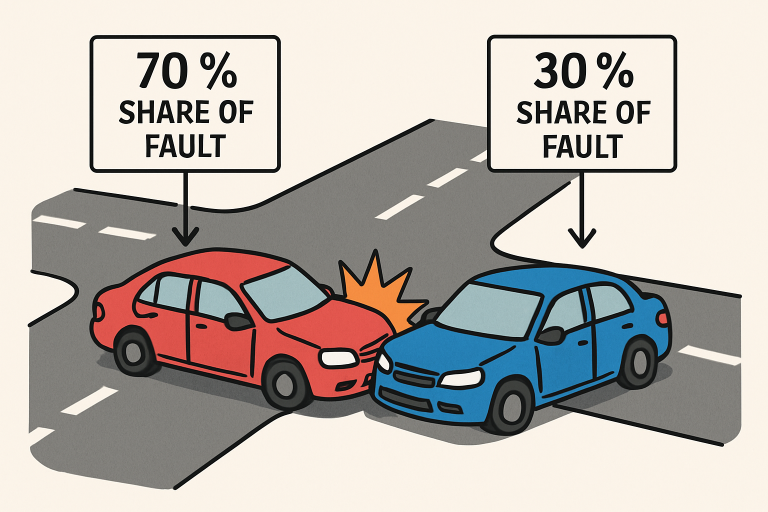
Calculating Compensation Based on Fault
In Texas, the amount awarded after a car crash is closely tied to each person’s share of fault. If the court finds a plaintiff entitled to $100,000 in damages but that plaintiff is 20% at fault, the final amount awarded would be reduced by $20,000, leaving only $80,000. The arithmetic is straightforward: total damages multiplied by (100% minus your percent of fault). This method ensures fairness and discourages exaggerated claims. Every accident, whether a minor fender bender or a major collision, follows this core formula in evaluating compensation.
Determining Fault in Car Accidents
The fault determination process in Texas car accidents is meticulous. It starts with investigating the accident scene and reviewing physical evidence, such as skid marks, vehicle damage, and traffic signal data. Police reports, witness testimony, and expert reconstructionists all help build a complete narrative. Both sides in a dispute can present their own evidence and call on specialists to strengthen their position. Because of this complexity, disagreements over percentages of fault are very common and often require skilled negotiation or legal resolution.
Access to reliable legal and technical resources is crucial in backing up your side of the story. Legal guidance also helps protect your own rights if you find yourself facing aggressive or inaccurate fault assessments from other drivers or insurers.
Impact on Insurance Claims
After a crash, insurance companies independently review the circumstances before deciding on fault. They gather statements, review physical and digital evidence, and apply Texas’s comparative fault system to their settlement offers. Insurers sometimes seek to enlarge your share of fault as a way to minimize what they pay out. For this reason, it is advisable to communicate carefully and avoid making statements that could be interpreted as an admission of fault. Working with an attorney when communicating with insurers often results in more favorable outcomes for claimants.
Legal Precedents and Case Studies
Texas courts frequently hear cases in which multiple parties share some of the fault. Their decisions guide how minor versus major fault is weighed and how actions leading up to the crash are considered in compensation decisions. Examining these case studies demonstrates the strict application of comparative fault rules and the fact-specific nature of every case. The courts’ focus on a fair distribution of liability reflects Texas’s broader objectives for its civil justice system, creating predictability and transparency for all parties involved.
Steps to Take After a Car Accident
Knowing what to do immediately after a crash is critical in both protecting your health and preserving your right to claim damages. Follow these steps:
- Take clear photographs and notes, covering every angle of the collision and the vehicles involved.
- Collect contact details for any witnesses, and be sure to record their accounts while memories are fresh.
- Do not delay getting a medical assessment, even for seemingly minor injuries. Some injuries develop symptoms over time.
- Notify your insurance provider about the incident as quickly as possible and keep records of all communications.
- Seek advice from a knowledgeable legal professional to safeguard your interests from the beginning.
Final Thoughts
Texas’s comparative fault laws create a balanced approach to determining fault and compensation in car accident cases. By understanding the “51% Bar Rule,” the method for calculating compensation, and the investigative process, individuals can make informed decisions and avoid pitfalls in insurance negotiations and legal action. Whether you are an accident victim or someone disputing fault, knowing your rights and your options is the best way to protect yourself and pursue a fair outcome under Texas law.


eSIM e mobilità digitale: come la tecnologia sta semplificando i viaggi moderni

The hidden role of industrial cameras in robotics and logistics

Grandparents’ Rights In North Carolina When Can You Seek Visitation

Piso Wifi 10.0.0.1 Pause Time – Complete Guide

How To Create a Home Office on a Budget