Real Estate
A Practical Coastal Home Buying Checklist in Panama City, Florida
Table of Contents
- Why Coastal Homes Need a Closer Review
- Start With the Purpose of the Purchase
- Build a Complete Ownership Budget
- Study the Location Beyond Listing Photos
- Check Flood Exposure and Insurance Early
- Inspect for Coastal Wear and Storm Protection
- Review HOA, Condo, and Rental Rules
- Compare Similar Properties the Right Way
- Add Local Context Before Making a Decision
- Build a Careful Offer
- Common Questions From Coastal Home Buyers
- Final Pre-Offer Checklist
Buying near the water in Panama City, Florida, can mean choosing among established neighborhoods, bayfront homes, newer communities, condos, and properties close to the Gulf. While comparing homes for sale in Panama City FL, buyers can use The Real Experts listing resource to explore available properties and community options across Panama City and nearby areas such as Lynn Haven, Callaway, and Panama City Beach. The Real Experts provide local residential real estate guidance, neighborhood information, and property search tools that can help buyers narrow their choices before touring homes.
A view, a dock, or beach access can make an immediate impression, but a smart purchase depends on the complete ownership picture. Use this checklist to assess the home, its location, insurance needs, neighborhood rules, and the ongoing practical costs after closing.
Why Coastal Homes Need a Closer Review
Coastal conditions deserve extra attention during a home search. Humidity, salt air, intense sun, wind-driven rain, heavy storms, and standing water can affect a property’s exterior and mechanical systems over time. Roof coverings, fasteners, paint, decks, windows, doors, HVAC equipment, and drainage all merit a careful look. A beautiful waterfront setting does not reveal the roof’s age, the seawall’s condition, or the cost of protecting the property.
Start With the Purpose of the Purchase
Define how the property will serve your household before comparing square footage or views. Your intended use changes the priorities.
- Primary residence: Consider commutes, schools, medical care, groceries, parking, and year-round services.
- Second home: Factor in travel, vacancy checks, storm preparation, security, and local maintenance support.
- Rental property: Review association restrictions, local requirements, minimum-stay rules, operating costs, and realistic management needs.
- Retirement home: Look for accessible layouts, manageable outdoor upkeep, quieter streets, and proximity to healthcare.
Build a Complete Ownership Budget
Your mortgage payment is only one part of the decision. Create both a monthly and annual estimate that includes the down payment, closing costs, property taxes, homeowners’ insurance, wind coverage where applicable, flood insurance if needed, utilities, association fees, landscaping, pest control, and routine repairs.
Also reserve funds for storm preparation, roof or HVAC replacement, exterior maintenance, and unexpected repairs. Second-home owners may need to add property management, cleaning, travel, and vacancy-related costs. A lender’s approval amount is not automatically a comfortable budget. Review multiple loan offers and use the Loan Estimate guide to compare projected payments, closing costs, and cash-to-close details before committing.
Study the Location Beyond Listing Photos
Visit promising areas more than once if possible. A quiet weekday showing may feel very different on a weekend, during rush hour, or during a busy tourism period. Check traffic flow, parking, road access, sidewalks, bike routes, nearby public access points, and noise from surrounding activity.
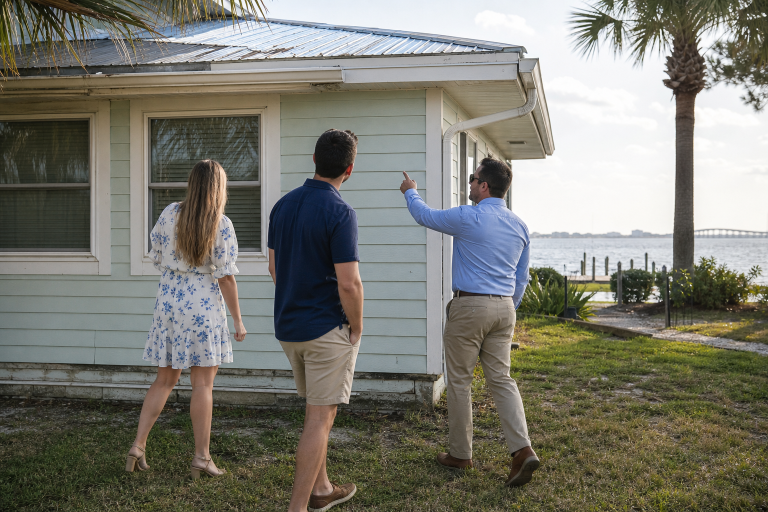
Test ordinary errands. Drive to grocery stores, healthcare, schools, work, restaurants, marinas, beaches, and major roads. Look for nearby construction, planned road work, or development that could affect privacy, travel time, or the neighborhood’s feel. Panama City, Lynn Haven, Callaway, and Panama City Beach can offer distinctly different settings, so compare daily convenience alongside price.
Check Flood Exposure and Insurance Early
Flood exposure can vary from one address to another because of elevation, drainage, building design, and surrounding land. Start by reviewing the address through the FEMA Flood Map Service Center, then ask questions that go beyond the map designation.
- Request property-specific homeowners, wind, and flood insurance quotes early in the process.
- Ask whether an elevation certificate is available and whether the seller has records of prior water intrusion or storm repairs.
- Inspect drainage paths, low areas, gutters, grading, and places where water may collect after rainfall.
- Review deductibles, coverage limits, exclusions, and any claims history available through the seller or insurer.
Insurance availability and cost should be confirmed before removing important contract protections. A map is a useful starting point, not the only factor in assessing a property’s risk.
Inspect for Coastal Wear and Storm Protection
A standard home inspection is essential, but some properties call for specialist reviews. Ask about roof age and repair history, HVAC condition, electrical panels, plumbing, windows, doors, exterior finishes, and visible corrosion, rot, mold, mildew, or water staining.
Review storm-protection features such as impact-rated openings, shutters, reinforced garage doors, and wind-mitigation improvements. Depending on the home, consider separate evaluations of the roof, dock, seawall, pool, septic system, mold concerns, structure, or drainage issues. Request permits and records for additions, decks, pools, docks, renovations, and major repairs.
Review HOA, Condo, and Rental Rules
Before making an offer on a property with an association, read the governing documents rather than relying on a short listing summary. Review the declaration, bylaws, architectural rules, budgets, reserve information, recent meeting minutes, and notices about special assessments or capital projects.
Confirm rules involving short-term rentals, pets, parking, boat or trailer storage, exterior changes, and renovation work. For a condo, understand what the association maintains and what remains your responsibility as an owner.
Compare Similar Properties the Right Way
Use recent closed sales, not only active asking prices, to understand value. Compare homes with similar locations, size, age, condition, construction type, parking, outdoor space, and storage. Keep waterfront, near-water, and inland homes in separate comparison groups whenever possible.
Then adjust for factors that materially affect ownership, including roof age, insurance expectations, storm features, HOA fees, rental restrictions, assessments, and deferred maintenance. Price reductions, days on market, and seller concessions can add useful context, but they should not replace a careful review of the home itself.
Add Local Context Before Making a Decision
Local knowledge can help turn a broad search into a workable shortlist. A buyer should understand which areas fit their preferred commute, boating access, neighborhood character, housing style, and comfort with maintenance. Ask specific questions about the street, nearby waterways, drainage, association history, and the practical differences between communities in Bay County.
Build a Careful Offer
The strongest offer is not always the highest one. Set a maximum price before writing, confirm financing and cash reserves, and choose practical protections for inspections, financing, and appraisals. Review open permits, repair documentation, included items, storm-related history, and any unresolved violations. Recheck insurance before major contract deadlines pass, then prioritize the repairs or credits that matter most to your long-term ownership plan.
Common Questions From Coastal Home Buyers
Is a coastal home always more expensive to own?
Not always, but insurance, exterior maintenance, storm preparation, association fees, and specialized repairs can increase annual costs. Compare each address on its own merits.
Should buyers avoid every property in a flood zone?
Flood exposure is one important factor, not an automatic answer. Consider elevation, drainage, insurance, prior damage, construction details, and your own risk tolerance.
Is new construction always the better choice?
Newer homes may offer newer systems and current construction practices, while older homes may provide established locations, mature landscaping, or layouts that better fit your needs.
Final Pre-Offer Checklist
- Calculate the full monthly and annual ownership cost.
- Confirm homeowners, wind, and flood insurance estimates.
- Review flood mapping, elevation information, drainage, and storm history.
- Inspect the roof, HVAC, plumbing, windows, exterior, and any waterfront structures.
- Read all HOA, condo, and rental documents.
- Compare recent closed sales and establish clear deal-breakers.
Buying a coastal home in Panama City should be about more than the view or the purchase price. A thorough review of location, insurance, flood exposure, property condition, ownership rules, and resale appeal can help you choose a home that works for everyday life and for the years ahead.


How Nevada Rules Shape a Personal Injury Claim After a Crash

A Yard-Watering Plan: Match Soil, Plants, and Sprinklers Before You Turn On the Timer

A Practical Coastal Home Buying Checklist in Panama City, Florida

Piso Wifi 10.0.0.1 Pause Time – Complete Guide

High-Risk Threats Targeting Banks and How to Mitigate Them
