Tips
Finding the Best SUV for Your Driving Habits
Key Takeaways
- Choose an SUV based on your daily routine, including passengers, cargo, commuting, and typical road conditions.
- Select a size that provides enough seating and cargo space without creating unnecessary parking, fuel, or maintenance costs.
- Compare gas, hybrid, plug-in hybrid, and electric powertrains based on mileage, charging access, range, and travel habits.
- Check important safety features and crash-test ratings, and make sure child seats and rear passengers fit comfortably.
- Calculate the total cost of ownership, including financing, fuel, insurance, maintenance, tires, taxes, and registration.
- Take a thorough test drive and bring regular passengers and cargo when possible.
- Avoid buying based only on size, appearance, or monthly payment; choose the SUV that meets your priorities with the fewest compromises.
Buying an SUV is easier when you start with your real routine instead of a wish list built around occasional trips. The right vehicle should make commuting, errands, school drop-offs, weekend plans, and parking feel manageable. Shoppers comparing an SUV for sale in Tulsa for family and adventure needs can narrow the search quickly by focusing on the people, cargo, roads, and costs involved in everyday driving. An SUV that looks ideal on a dealership lot may feel oversized in a tight garage, cramped behind the second row, or expensive to operate over time. Before comparing brands, decide which needs are nonnegotiable and which are only occasional conveniences. That approach helps you find a vehicle that fits your life now while leaving enough flexibility for what may change in the next few years.
Start With Your Routine
Begin by looking at a normal week. Estimate how many miles you drive, where those miles happen, and who rides with you most often. A commuter who spends most of the day in city traffic has different priorities than someone who drives long stretches of highway, travels gravel roads, or regularly carries tools and equipment.
- List regular passengers, including children, teens, pets, and visiting relatives.
- Think about the gear you carry every week, such as groceries, a stroller, work supplies, sports bags, or camping equipment.
- Decide whether snow, steep hills, unpaved roads, or towing are normal needs rather than rare situations.
- Separate everyday needs from once-a-year needs, such as one large holiday trip.
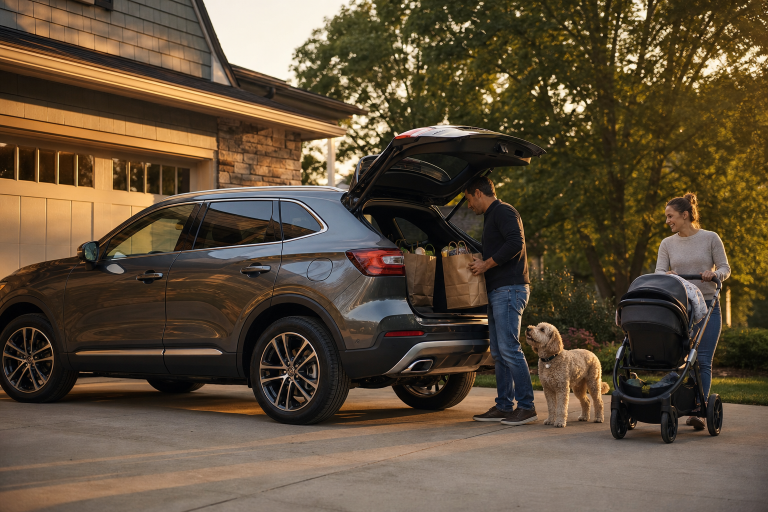
A couple with one dog may be comfortable in a two-row SUV with a practical cargo area. A family using rear-facing child seats or hauling a team to practice may benefit more from easy third-row access and room behind the rear seats.
Choose The Right SUV Size
SUV labels can be confusing because similarly sized models may be marketed differently. Instead of relying on a category name alone, compare exterior dimensions, interior room, cargo measurements, and how the vehicle feels on the road.
Subcompact SUVs
These smaller models are often easy to park, economical to operate, and simple to maneuver in crowded areas. They can be a strong fit for solo drivers, couples, and small households, but rear-seat and cargo space may be limited.
Compact SUVs
Compact SUVs offer a useful middle ground for many buyers. They generally provide comfortable space for four people, a flexible cargo room, and a more manageable footprint than larger models. This category is popular with commuters and small families.
Midsize and Full-Size SUVs
Midsize SUVs may offer a third row and a stronger towing capacity.
Compare Seating And Cargo Space
Seat count does not tell the complete story. A vehicle advertised for seven or eight passengers may have a third row best suited to children, while another three-row model may leave little room for luggage when every seat is occupied.
- Sit in every row, especially behind the driver’s normal seating position.
- Check how easily passengers can reach the third row.
- Look at cargo space with all seats raised, not only with the rear rows folded.
- Bring a car seat, stroller, cooler, golf bag, or other item you use regularly.
- Look for wide rear openings, low lift-over height, fold-flat seats, and useful storage bins.
Check Fuel And Powertrain Needs
Powertrain choice should match both your mileage and your access to fuel or charging. Gas-powered SUVs remain straightforward for drivers who take long trips or travel through areas with limited charging. Hybrids can reduce fuel use during stop-and-go driving, while plug-in hybrids make the most sense when they can be charged consistently. Electric SUVs can be practical for households with dependable home or workplace charging. Before choosing one, compare range, charging speed, winter conditions, and your usual road-trip routes. The fuel economy estimates for different vehicle types can help you compare annual energy costs, but real results will vary with speed, weather, cargo, roof racks, and towing.
Look At Safety Features
Modern safety equipment can add confidence, but not every system performs the same way in every vehicle. Look for automatic emergency braking, forward-collision warning, blind-spot monitoring, rear cross-traffic alert, and a clear backup camera. Test the controls yourself, because a feature that is difficult to understand or constantly intrusive may become frustrating. It is also wise to review vehicle crash-test ratings while comparing models. For family use, confirm that child seats install securely, seat belts are easy to access, head restraints adjust properly, and rear passengers have adequate visibility and comfort.
Estimate Ownership Costs
The purchase price is only part of the financial picture. Build a realistic monthly estimate that includes the payment, fuel or charging, insurance, routine maintenance, parking, taxes, registration, and a reserve for repairs. Request insurance quotes before committing, as premiums can vary significantly among similar SUVs. For used models, review service records and obtain a vehicle history report. An independent inspection is worth considering, particularly for an SUV with towing use, off-road use, high mileage, or uneven tire wear. Also, compare tire sizes, because larger or specialty tires can make future replacements more expensive.
Test Drive With A Checklist
A short drive around the block is not enough. Use a route that includes neighborhood streets, turns, parking, and highway speeds when possible. Adjust the seat and mirrors as you normally would, then pay attention to visibility, ride comfort, noise, braking, and steering response.
- Check visibility over the hood, through the mirrors, and around the rear pillars.
- Drive through a tight parking area and make a few controlled turns.
- Test acceleration and braking in safe conditions.
- Try climate, navigation, camera, and audio controls without taking attention away from driving.
- Load your regular gear and ask passengers to sit where they normally would.
- Write down what felt natural and what created frustration.
Avoid Common Buying Mistakes
Do not buy the largest SUV simply because it has the most seats, and do not assume all-wheel drive replaces proper tires or careful winter driving. Avoid focusing only on the monthly payment, since a longer loan can hide a higher total cost. Finally, measure the garage, parking space, and driveway before choosing a larger vehicle.
Make The Final Decision
Rank your five most important needs, such as cargo room, fuel costs, passenger comfort, towing, safety, or easy parking. Score each finalist from one to five in every category. The best SUV is not necessarily the biggest or most powerful option. It is the one that handles daily responsibilities comfortably, fits your budget, and requires the fewest meaningful compromises.
Conclusion
Choosing the right SUV is ultimately about finding a practical balance between comfort, capability, safety, and cost. Start with the needs you face most often, then compare vehicle size, seating capacity, cargo capacity, powertrain, safety features, and ownership costs against those priorities. A careful test drive and realistic assessment of your garage, parking space, passengers, and regular cargo can reveal issues that are easy to overlook at a dealership. Whether you need a compact SUV for commuting or a larger model for family travel and equipment, the best choice is the one that fits your everyday routine without adding unnecessary expense or inconvenience. By focusing on how the vehicle will actually be used, you can make a more confident purchase and choose an SUV that remains useful as your needs change.


How Nevada Rules Shape a Personal Injury Claim After a Crash

A Yard-Watering Plan: Match Soil, Plants, and Sprinklers Before You Turn On the Timer

A Practical Coastal Home Buying Checklist in Panama City, Florida

Piso Wifi 10.0.0.1 Pause Time – Complete Guide

High-Risk Threats Targeting Banks and How to Mitigate Them
