Home Improvement
How to Choose a Cabinet Door Style That Fits Your Salt Lake City Kitchen
Key Takeaways
- Choose the cabinet door profile before settling on paint color, hardware, or decorative accents.
- Shaker, flat-panel, raised-panel, slim-profile, and beadboard doors each create a distinct visual character.
- Salt Lake City homeowners should consider natural light, kitchen size, home architecture, and everyday maintenance needs.
- Smoother door fronts are generally simpler to wipe down, while more detailed profiles add texture and visual depth.
- Viewing samples inside the kitchen is essential because daylight, evening lighting, counters, and flooring affect how a cabinet finish appears.
Cabinet doors occupy a large share of the visible surface in any kitchen, so their style has an outsized effect on the finished room. For homeowners comparing custom cabinets in Salt Lake City, the best starting point is not a trending color. It is a door profile that fits the house, the room, and the way the kitchen is used.
That choice matters in Salt Lake City, where kitchens range from historic bungalows and mid-century homes to newer mountain-inspired builds and compact urban condos. A cabinet door should complement the surrounding architecture rather than compete with the backsplash, countertops, flooring, and appliances. The goal is a kitchen that feels deliberate in every season, from bright summer mornings to darker winter evenings.
Why Cabinet Door Style Matters
Cabinet door style refers to the door’s face, including its frame, panel depth, edge shape, and decorative details. It is separate from cabinet-box construction, installation method, material, and finish, although all of those choices work together. A simple door can make a busy stone countertop feel balanced, while a detailed door can bring warmth to a kitchen with clean, quiet surfaces.
Before choosing a profile, it helps to understand how doors relate to the rest of the cabinet system. A basic overview of kitchen cabinet construction, materials, and hardware can clarify the difference between the visible door and the cabinet box behind it.
Start With the Kitchen’s Overall Look
Use the home’s existing character as a guide. Traditional homes often accommodate raised panels or more detailed framed doors. Farmhouse, cottage, and relaxed mountain homes may suit Shaker or beadboard details. Contemporary spaces usually benefit from flat panels or slim frames, while transitional kitchens can combine classic proportions with restrained, current-looking details.
Older Salt Lake City homes do not need to become replicas of another era, but a door style that respects original trim, flooring, and window details can feel more natural than one chosen solely from a showroom display. In a newer home, clean lines and a limited material palette can create a calm, cohesive result.
Compare the Main Cabinet Door Profiles
Shaker Doors
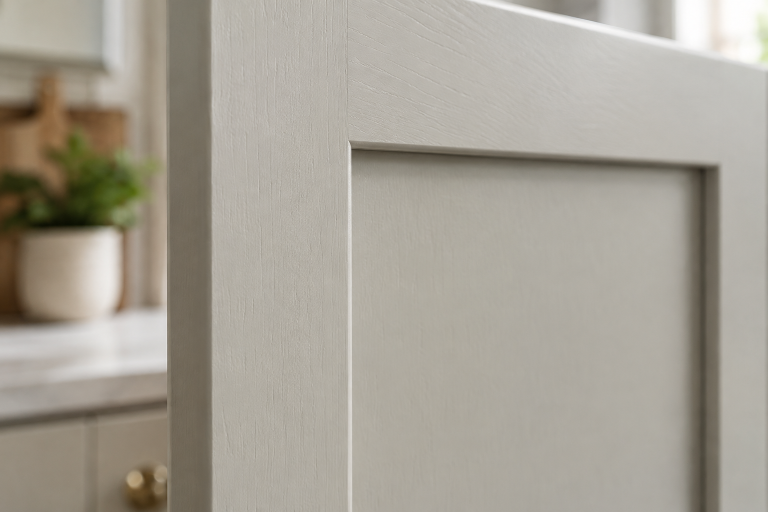
Shaker doors use a simple frame around a recessed center panel. They work across traditional, farmhouse, transitional, and many contemporary kitchens because the profile is straightforward without being plain. A wider frame can feel more classic, while a narrower frame often reads as more streamlined.
Flat-Panel Doors
Flat-panel doors have an uninterrupted face with little or no applied detail. They are well suited to modern kitchens, smaller rooms, and layouts where a cleaner visual field can make cabinetry feel less busy. Because the door is simple, the finish, grain pattern, and hardware become especially noticeable.
Raised-Panel Doors
Raised-panel doors add depth through a center panel that projects forward and often includes shaped edges. They can suit formal, traditional, or classically inspired kitchens. Their grooves and contours create a richer appearance, but they also introduce more edges to clean around.
Slim-Profile Doors
Slim-profile doors, including slim Shaker designs, use narrower rails and stiles than a conventional framed door. They offer some dimensional detail while maintaining a lighter, more current appearance. This can be a practical middle ground for homeowners who want more character than a slab door but less visual weight than a wide frame.
Beadboard and Textured Doors
Beadboard and other grooved doors bring texture and a casual, cottage-inspired feel. They can add personality to an island, pantry wall, or selected display area. Consider cleaning carefully before committing to a textured surface throughout a high-use kitchen, especially near the range and sink.
Match the Door Style to Kitchen Size and Light
Visual weight matters. In a compact or low-light kitchen, simple profiles and lighter finishes can help the room feel more open. A larger kitchen with generous windows may carry deeper colors, pronounced wood grain, or a more detailed door profile without feeling crowded.
- Look at the kitchen in morning, afternoon, and evening light.
- Place door samples beside the countertop, backsplash, flooring, and wall color.
- Check whether the door detail creates too much visual movement when repeated across upper and lower cabinets.
- Consider whether upper cabinets should feel lighter than the lower cabinetry.
Consider Cleaning and Daily Use
A beautiful door should also fit the household routine. Smooth slab doors and lightly detailed Shaker doors are generally easier to wipe than deeply routed or heavily grooved profiles. Families who cook frequently, entertain often, or have children may prefer finishes that do not highlight every fingerprint or small splash.
No profile eliminates routine care. The practical question is whether the door’s level of detail is worth the cleaning attention it will need in the areas your household uses most.
Look Beyond the Door Profile
- Overlay: Full-overlay doors cover more of the cabinet frame, while partial-overlay and inset styles reveal more structure around each opening.
- Material: Solid wood, plywood, engineered panels, veneer, laminate, and painted surfaces can all serve different design and budget goals.
- Finish: Paint, stain, natural wood, matte finishes, and higher-sheen finishes change how the same profile is perceived.
- Hardware: Knobs, pulls, edge pulls, or handleless details can make a door look more traditional, modern, or tailored.
- Color: Wood tones, neutrals, and muted colors tend to coordinate easily with future updates to walls, textiles, and decor.
Use Color and Finish With Care
Light finishes can reflect more light and help cabinetry recede, while dark finishes add contrast and depth. Natural wood brings grain and warmth, which can be especially welcome against stone, tile, or painted walls. Keep the overall composition focused by limiting competing colors and finishes, then test samples where they will actually be installed.
Mix Styles Only With a Clear Plan
Mixing cabinet styles can work when there is a hierarchy. Use one main profile across most of the kitchen, then reserve a second treatment for an island, pantry, or hutch-like section. Repeat a shared color, finish, or hardware style so the variation looks intentional rather than accidental.
A Simple Selection Process
- Define the desired feeling: classic, relaxed, modern, or transitional.
- Choose a primary door profile before selecting decorative details.
- Evaluate room size, light, ceiling height, and nearby finishes.
- Choose a surface that fits cleaning habits and daily use.
- Test colors and sheens in the actual kitchen.
- Coordinate hardware with the door scale and overall style.
- Confirm overlay, hinge placement, drawer fronts, measurements, and installation details before ordering.
Common Mistakes to Avoid
- Choosing from a showroom sample without seeing the finish at home.
- Selecting color before considering counters, floors, and backsplash materials.
- Following a short-lived look that conflicts with the home’s architecture.
- Using too many competing door profiles in one room.
- Overlooking cleaning needs and the effect of hardware size on the final balance.
Final Decision Checklist
Before making the final choice, ask whether the door profile fits the home, works in both natural and artificial light, complements the surrounding finishes, and is manageable for everyday care. The best cabinet door for a Salt Lake City kitchen in 2026 is not necessarily the boldest or newest option. It is the one that makes the room feel cohesive, useful, and comfortable for years to come.


How to Choose a Cabinet Door Style That Fits Your Salt Lake City Kitchen

How To Choose A Medical Malpractice Lawyer For Your Claim

North Liberty Workplace Injury Cases: Key Steps To Take

Piso Wifi 10.0.0.1 Pause Time – Complete Guide

High-Risk Threats Targeting Banks and How to Mitigate Them
