Tech News
How To Choose A Fuel-Efficient Vehicle For Daily Driving And Weekend Trips
Table Of Contents
- Why Fuel Efficiency Matters
- Start With Driving Habits
- Compare Powertrain Options
- Decide Between A Sedan And An SUV
- Check Real Ownership Costs
- Use MPG And MPGe Data The Right Way
- Plan For Weekend Trips
- Consider Charging Access
- Follow A Test-Drive Checklist
- Common Questions
- Final Thoughts
Choosing a fuel-efficient vehicle is about more than finding the highest number on a window sticker. The best choice should make weekday commuting affordable while still providing the comfort, space, and flexibility needed for weekend plans. Whether you are considering a sedan, SUV, hybrid, or EV, learn more about models that can fit your everyday driving needs.
Start with the way you actually use a vehicle. A compact car may be ideal for one driver with a short commute, while a small family may need a roomier hybrid SUV. Fuel efficiency matters, but cargo space, passenger comfort, reliability, safety features, and access to charging should all be part of the decision.
Why Fuel Efficiency Matters
Better fuel economy can lower weekly operating costs, reduce time spent at gas stations, and make a noticeable difference for drivers who cover many miles each year. Still, the most efficient vehicle is not automatically the smallest vehicle. A model that is too cramped for passengers, luggage, tools, or pets may create frustration and lead to an earlier replacement. Review the fuel-economy label details and comparison information to understand estimated fuel costs, emissions, and efficiency ratings before narrowing your list.
Start With Driving Habits
Begin with your routine rather than a favorite body style. Consider how many miles you drive weekly, whether your routes are mostly city streets or highways, how often passengers ride with you, and how much cargo you carry. Also, think about monthly trips, towing needs, weather conditions, and whether you can charge at home or work.
Match The Vehicle To The Driver
- Daily commuter: A compact sedan, hybrid, or efficient EV can be a practical choice.
- Small family: A compact SUV may provide better rear-seat flexibility and cargo space.
- Frequent road-tripper: Highway comfort, range, quick refueling, and quietness matter more.
- Utility-focused driver: Compare payload, towing, drivetrain, and efficiency together.
Compare Gas, Hybrid, Plug-In Hybrid, And Electric Powertrains
Gas-Powered Vehicles
Gas vehicles remain a sensible option for drivers who regularly travel long distances, live far from public chargers, or want familiar refueling on every route. Choosing a lighter vehicle or a smaller, more efficient engine can reduce fuel use without requiring a major change in daily habits.
Hybrid Vehicles
A regular hybrid combines a gasoline engine with electric assistance and does not need to be plugged in. It can work especially well in stop-and-go traffic, errands, and mixed commuting because the system can recapture some energy during braking. The purchase price may be higher than a comparable gas model, so compare expected savings over the time you plan to own it.
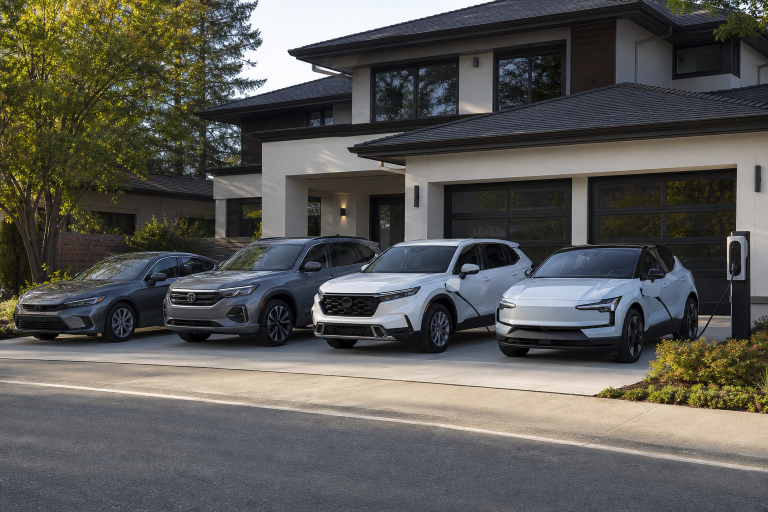
Plug-In Hybrid Vehicles
Plug-in hybrids can handle many shorter trips on electricity while retaining a gasoline engine for longer drives. They are best for drivers with dependable home or workplace charging and predictable daily routes. Without regular charging, much of the potential fuel-saving benefit can disappear.
Electric Vehicles
EVs offer quiet operation, no gasoline stops for daily travel, and fewer routine engine-related maintenance needs. They work best when charging naturally fits your routine. Check real-world range, charging speed, public charger availability, cold-weather performance, and the effect of hills, passengers, or heavy cargo before deciding.
Decide Between A Sedan And An SUV
A sedan can be easier to park, lighter on fuel, and more comfortable for commuting or highway travel. It is often a strong fit for one or two people with moderate cargo needs. An SUV may be the better all-purpose choice when you need a higher seating position, flexible cargo room, space for pets or sports equipment, or easier access to rear seats.
A compact SUV can offer a useful middle ground, but do not assume all-wheel drive is essential. It can add confidence in certain weather conditions, yet extra drivetrain components and weight may reduce efficiency. Choose it because your roads and climate justify it, not simply because it is available.
Check Real Ownership Costs
The purchase price is only one part of the financial picture. Compare monthly payment or upfront price, fuel or electricity costs, insurance, routine maintenance, tires, possible charging equipment, and likely resale value. Two similarly priced vehicles can cost very different amounts over several years.
For example, a driver traveling 15,000 miles annually may recover a hybrid’s higher initial price faster than someone who drives only a few thousand miles. Ask for realistic estimates based on your expected mileage rather than relying only on advertised savings.
Use MPG And MPGe Data The Right Way
City MPG reflects lower-speed driving with more stopping and starting. Highway MPG reflects steady higher-speed travel, while combined MPG provides a quick blended estimate. Actual results vary with traffic, speed, weather, tire pressure, cargo weight, and driving style. MPGe is used for plug-in vehicles to compare the energy used for electric driving with the energy in a gallon of gasoline. Compare similarly sized vehicles so the numbers tell a more useful story.
Plan For Weekend Trips
A vehicle that feels excellent during a 20-minute commute can be tiring after several hours on the road. Check front-seat support, rear-seat room, road noise, visibility, phone connectivity, navigation, highway passing power, and cargo capacity for bags, coolers, or outdoor gear. The practical question is simple: will this vehicle still feel comfortable at the end of a long drive?
Consider Charging Access
For EV and plug-in hybrid shoppers, charging access is as important as range. Level 1 charging uses a standard household outlet and is often suitable for overnight plug-in hybrid charging. Level 2 equipment provides faster home charging, while DC fast charging is intended for quicker public charging stops. The Department of Energy explains how charging options, driving requirements, and route planning affect whether an EV fits a household.
Apartment residents should identify workplace, community, or public charging before buying. Homeowners should check electrical capacity, installation costs, permits, and equipment compatibility before scheduling a Level 2 installation.
Follow A Simple Test-Drive Checklist
- Bring regular passengers and test the rear-seat space.
- Open the cargo area and picture your usual bags or gear inside it.
- Try parking, turning, braking, merging, and highway driving if possible.
- Check visibility, dashboard controls, and infotainment usability.
- Listen for road noise and assess seat comfort.
- Compare at least two similar vehicles before making a final decision.
Common Questions
Is A Hybrid Better Than A Gas Vehicle For Daily Driving?
It depends on mileage, fuel prices, purchase price, driving conditions, and ownership length. Hybrids often shine in city and mixed driving, while an efficient gas vehicle may be enough for lower-mileage drivers.
Is An EV Practical For Weekend Trips?
Yes, when its range, charging speed, route coverage, and cargo space match your travel habits. Plan a typical trip before purchase instead of assuming every EV will serve the same routes equally well.
How Can Drivers Improve Fuel Economy After Buying?
Keep tires properly inflated, remove unnecessary cargo, avoid hard acceleration and braking, follow maintenance schedules, use climate controls thoughtfully, and combine errands when practical.
Final Thoughts
The right fuel-efficient vehicle should work on ordinary weekdays and real weekend trips. By comparing your driving habits, powertrain needs, passenger and cargo requirements, charging access, and long-term costs, you can choose a vehicle that delivers value without sacrificing the flexibility your life requires.


How Nevada Rules Shape a Personal Injury Claim After a Crash

A Yard-Watering Plan: Match Soil, Plants, and Sprinklers Before You Turn On the Timer

A Practical Coastal Home Buying Checklist in Panama City, Florida

Piso Wifi 10.0.0.1 Pause Time – Complete Guide

High-Risk Threats Targeting Banks and How to Mitigate Them
