Tips
How to Choose a Luxury SUV or Sedan That Fits Daily Life
Key Takeaways
- Choose a luxury vehicle based on daily routines, not appearance alone.
- Sedans can deliver composed handling and strong highway comfort, while SUVs offer flexible cargo space and a higher seating position.
- Powertrain choice should match driving distance, charging access, and travel habits.
- Safety, technology, insurance, maintenance, and resale value all influence long-term ownership costs.
- A thorough test drive often reveals details that specifications cannot.
Table of Contents
- Start With Your Daily Routine
- Choose Between a Sedan and an SUV
- Compare Powertrain Choices
- Check Comfort, Space, and Cargo
- Review Safety and Technology
- Calculate Ownership Costs
- Test Drive and Finalize the Decision
- Consider Pre-Owned and Certified Models
- Conclusion
A luxury vehicle should make ordinary days easier, whether that means a calmer commute, comfortable family travel, room for weekend gear, or confidence in poor weather. The best choice is rarely the vehicle with the longest feature list. It is the one that works naturally with the way you drive, park, carry passengers, and manage your budget. Shoppers comparing options can learn more while building a practical list of priorities.
Before focusing on a badge, exterior design, or horsepower figure, think about the next several years of ownership. A sedan and an SUV can both feel refined, quiet, and rewarding, but their strengths are different. Matching those strengths to everyday needs helps turn a major purchase into a satisfying long-term decision.
Start With Your Daily Routine
Begin with real-life questions. How many miles do you drive each week? Are most trips short city errands, long highway commutes, or frequent road trips? Consider who rides with you, where the vehicle will be parked, whether winter roads are a concern, and whether you regularly carry pets, sports equipment, work supplies, or a stroller.
A driver with a short commute may put quiet operation, supportive seats, and efficiency first. A growing family may need wider rear doors, easier child-seat access, and a cargo area that accepts bulky items without a struggle. If towing, unpaved roads, or frequent trips to a vacation property are part of the plan, verify those needs early instead of treating them as occasional exceptions.
Choose Between a Sedan and an SUV
Why a Sedan May Fit Better
A luxury sedan is often a strong fit for drivers who value an engaging, balanced feel on the road. Its lower center of gravity can make it feel settled through turns, and its lower roofline may make garage parking easier. Many sedans also provide a generous trunk, a polished highway ride, and a lower step-in height for passengers who prefer not to climb up into a vehicle.
Why an SUV May Fit Better
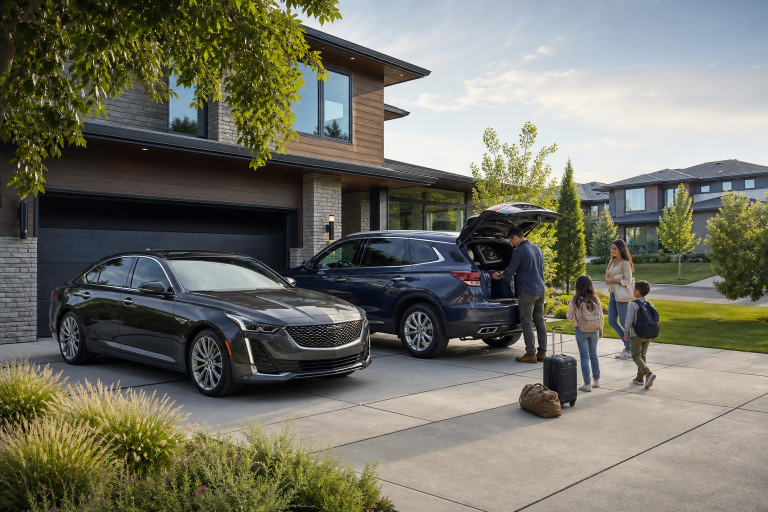
An SUV usually brings more vertical space, flexible cargo capacity, and a higher driving position. It can be especially useful for families, pet owners, and people who carry irregularly shaped gear. However, size matters as much as body style. A compact luxury SUV may be easier to park than a large sedan, while a midsize sedan can sometimes provide better rear-seat comfort than a small SUV.
Compare Powertrain Choices
Powertrain selection deserves as much attention as cabin design. Gasoline models remain convenient for drivers who take long trips or cannot charge at home. Conventional hybrids can reduce fuel use in traffic without changing refueling habits. Plug-in hybrids make sense when many trips fit within electric driving range, but gasoline backup is still useful for travel. Fully electric vehicles offer quiet performance and instant response, yet work best when dependable charging is available at home, work, or along common routes.
Compare actual operating needs instead of relying on one advertised range or efficiency number. The federal tool that lets drivers compare vehicles side by side can help narrow down differences in estimated fuel use and annual energy costs. Cold weather, higher speeds, cargo weight, and driving style can all affect real-world results.
Check Comfort, Space, and Cargo
Interior dimensions are useful, but they do not tell the complete story. Seat shape, roofline, door openings, visibility, and console placement can make two similarly sized vehicles feel very different. Spend time in both rows, especially if adults, children, or frequent guests will ride in the back.
- Adjust the front seat and steering wheel for a natural driving position.
- Check rear-seat legroom, headroom, and ease of entry.
- Open the trunk or liftgate and assess loading height.
- Listen for tire, wind, and road noise on varied pavement.
- Bring a stroller, suitcase, golf bag, pet crate, or other common item if possible.
Review Safety and Technology
Look beyond broad terms such as “driver assistance.” Confirm whether the exact trim includes automatic emergency braking, blind-spot monitoring, lane-support features, adaptive cruise control, rear cross-traffic alerts, and parking cameras. Independent ratings matter because they evaluate occupant protection as well as crash avoidance systems. Drivers can use vehicle safety ratings to review how specific models perform in recognized tests.
Technology should reduce effort, not create distractions. Test the screen in sunlight, connect a phone, try the navigation and voice controls, and locate climate settings. Physical controls for frequently used functions can be more useful than a large display filled with menus. Driver-assistance features should feel predictable and easy to adjust, but they never replace an attentive driver.
Calculate the Full Ownership Cost
Do not evaluate affordability through the monthly payment alone. Include the purchase price or lease terms, down payment, financing rate, insurance, fuel or electricity, scheduled service, tires, registration, and expected depreciation. A vehicle with a higher initial price may offer stronger value if it is efficient, reliable, and likely to retain more value over time.
Create a simple comparison list for each finalist:
- Monthly payment and total amount financed
- Estimated annual energy expense
- Insurance quote for the exact model and trim
- Maintenance needs and warranty coverage
- Cost of replacement tires and common wear items
- Expected resale value after several years
Test Drive and Finalize the Decision
A smart test drive goes beyond acceleration. Drive on smooth and rough roads, make tight turns, merge at highway speed if possible, and park in a realistic space. Try the infotainment system while stopped, check outward visibility, and inspect rear-seat access. Test at least two vehicles on the same day so differences in ride quality, steering, seat support, and cabin noise are easier to notice.
For a final decision, score each vehicle according to daily usefulness, comfort, passenger and cargo space, powertrain fit, safety equipment, technology usability, and total ownership cost. Leave room for personal enjoyment, too. A vehicle should feel good to use every time you get behind the wheel.
Consider Pre-Owned and Certified Models
Pre-owned luxury vehicles can provide premium features at a lower purchase price, but careful inspection is essential. Review the vehicle history, service records, remaining warranty, accident repairs, tire condition, brake wear, and included keys or charging equipment. Certified options may add inspection requirements and warranty support, although buyers should always read the specific coverage terms.
Conclusion
The right luxury SUV or sedan is the one that comfortably supports daily life over thousands of miles. By considering routine driving, body style, powertrain needs, cabin usability, safety, technology, and long-term costs, shoppers can make a choice based on lasting value rather than a first impression.


How to Choose a Luxury SUV or Sedan That Fits Daily Life

How Nevada Rules Shape a Personal Injury Claim After a Crash

A Yard-Watering Plan: Match Soil, Plants, and Sprinklers Before You Turn On the Timer

Piso Wifi 10.0.0.1 Pause Time – Complete Guide

High-Risk Threats Targeting Banks and How to Mitigate Them
