Real Estate
Innovative Strategies for Sustainable Commercial Real Estate Development
Key Takeaways:
- Implementing sustainable practices in commercial real estate enhances property value and attracts eco-conscious tenants.
- Energy-efficient designs and materials lead to significant cost savings and operational efficiency.
- Adhering to environmental regulations and obtaining green certifications can provide a competitive edge in the market.
Table of Contents:
- Energy-Efficient Designs and Materials
- Green Certifications and Compliance
- Adaptive Reuse and Retrofitting
- Integration of Smart Technologies
- Tenant Engagement and Sustainability
- Financial Incentives and Green Financing
- Conclusion
The landscape of commercial real estate is rapidly evolving as sustainable development moves to the forefront of industry priorities. Environmental concerns, regulatory requirements, and changing tenant expectations are prompting developers and investors to seek innovative solutions for eco-friendly buildings. These strategies not only address climate goals but also boost long-term returns, enhance tenant satisfaction, and preserve property value. For those looking to lead by example, working with Oklahoma architects known for their sustainable design expertise is often the first step toward future-proofing commercial spaces.
Sustainable buildings outperform, using fewer resources, cutting costs, and remaining competitive as demand for eco-friendly workplaces grows. Approaches like smart materials and energy-efficient systems are transforming how commercial properties are designed, developed, and managed. Developers, managers, and tenants see sustainability as essential for long-term success.
It also promotes healthier indoor environments and employee well-being, attracting and retaining top talent. Sustainable developments benefit from incentives and navigate a complex, green-focused regulatory landscape.
As climate action urgency increases, adopting these strategies is crucial for environmental responsibility, resilience, and profitability. Effective transition requires understanding best practices, including innovative design, tenant engagement, and green financing.
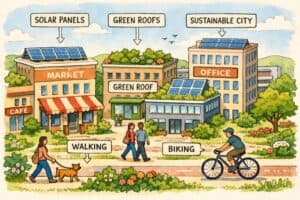
Energy-Efficient Designs and Materials
At the core of any sustainable development are energy-efficient designs and materials that minimize a building’s carbon footprint and operating expenses. High-performance insulation, advanced glazing, and LED lighting systems are just some of the tools used by progressive architects and builders. Installing energy-efficient HVAC systems ensures optimal temperature control while consuming less energy. These strategies work together to create buildings that use fewer resources throughout their lifecycles.
Renewable energy solutions, such as solar panels and geothermal systems, further strengthen a property’s environmental credentials and yield long-term cost savings. According to Building Design + Construction, commercial properties that invest in energy efficiency can achieve operating cost reductions of up to 30 percent, making eco-friendly upgrades not only preferable but also financially smart.
Green Certifications and Compliance
Securing green building certifications, such as LEED (Leadership in Energy and Environmental Design) or BREEAM (Building Research Establishment Environmental Assessment Method), is an essential way to demonstrate a commitment to sustainability. These certifications are globally recognized markers of quality, helping to distinguish a property in a crowded marketplace. They provide buyers and tenants with confidence that environmental best practices have been followed from planning to occupancy.
Further, compliance with local and state environmental legislation is not optional for today’s developers. Regulations like New York City’s Local Law 97 require significant reductions in carbon emissions from large buildings, and noncompliance can result in substantial penalties. Those who proactively pursue certifications are better prepared to meet or exceed evolving regulatory standards, thereby reducing risk and positioning their assets for long-term viability.
Adaptive Reuse and Retrofitting
Adaptive reuse breathes new life into existing buildings by converting them for new purposes, thus conserving resources and reducing environmental impact. Instead of demolishing old structures, developers now transform warehouses, factories, or outdated office blocks into thriving hotels, lofts, or co-working spaces. This not only preserves the historical and cultural fabric of a community but also minimizes demolition waste and reduces the use of new construction materials.
Retrofitting is another critical component of sustainable development. Upgrading older buildings with modern energy and water-efficiency technologies enables property owners to significantly reduce utility costs while ensuring compliance with current codes. Retrofitted properties often outperform new builds in terms of sustainability if the upgrades are well-designed and implemented.
Integration of Smart Technologies
Smart building technologies bring a new dimension to energy conservation and operational efficiency. Automated lighting, occupancy sensors, and advanced HVAC controls dynamically adjust energy usage based on real-time needs, eliminating waste. Smart meters and building management systems collect data that can be analyzed to optimize operations, pinpoint inefficiencies, and guide future upgrades.
These technologies also play a vital role in tenant comfort and satisfaction. Digital controls enable tenants to personalize workspaces for optimal productivity, while data-driven insights help property managers anticipate and resolve issues faster. As a result, smart technologies are a key selling point for forward-thinking commercial properties and are becoming increasingly standard in ambitious sustainability projects.
Tenant Engagement and Sustainability
Sustainability is most effective when building users are actively involved. Engaging tenants via education, recycling, and amenities like bike storage or EV chargers fosters collaboration and promotes sustainable habits. Awareness of energy and resource conservation helps reduce environmental impact. Clear guidelines and feedback encourage teamwork. Tenants prefer spaces aligned with their values, boosting occupancy and value.
Financial Incentives and Green Financing
The financial case for sustainability is compelling, thanks in part to government and private-sector incentives. Tax credits, utility rebates, and grants can help offset the upfront costs of green upgrades. Additionally, green financing products, such as energy-efficient mortgages and loans, are specifically tailored to projects that meet established performance standards.
Programs like Fannie Mae’s Green Rewards make capital more accessible for developers who prioritize energy and water efficiency, further supporting sustainable growth. As more investors and lenders recognize the reduced risk and increased value of green assets, access to favorable financing terms is likely to expand, accelerating adoption across the industry.
Conclusion
Implementing innovative strategies in sustainable commercial real estate development not only addresses urgent environmental challenges but also yields measurable benefits for property owners and tenants. Energy-efficient designs, green certifications, adaptive reuse, smart technologies, tenant engagement, and green financing work together to create commercial spaces that are resilient and successful in a rapidly changing market. By investing in these practices now, developers and investors ensure their properties remain attractive, profitable, and compliant for years to come.


How Nevada Rules Shape a Personal Injury Claim After a Crash

A Yard-Watering Plan: Match Soil, Plants, and Sprinklers Before You Turn On the Timer

A Practical Coastal Home Buying Checklist in Panama City, Florida

Piso Wifi 10.0.0.1 Pause Time – Complete Guide

High-Risk Threats Targeting Banks and How to Mitigate Them
