Home Improvement
Piering Methods Used for Crawl Space Repair in Huntsville AL
Subtle foundation movement can eventually affect floors, walls, doors, and structural framing throughout a home. Different piering systems address different soil, access, and load conditions, which makes a detailed inspection essential before work begins. Careful planning helps identify a repair method that stabilizes the structure without adding unnecessary materials or disturbance.
Push Piers Driven to Deep, Load-bearing Bedrock
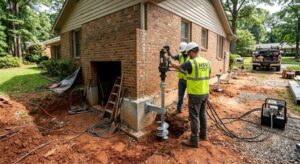
Push piers consist of steel sections driven hydraulically through weak upper soil until they reach dense material or load-bearing bedrock. Resistance readings taken during installation help verify whether each pier has reached a layer capable of supporting the building.
Brackets connect the finished pier system to the foundation and transfer structural weight away from unstable ground. Crews may lift settled sections in controlled stages, although preventing further movement remains the main purpose. Homeowners seeking crawl space repair in Huntsville AL should ask how installers confirm pier depth, capacity, bracket placement, and final load transfer.
Helical Piers Screwed into Stable Huntsville Clay
Helical piers resemble oversized steel screws, with circular plates welded along a central shaft. Installation equipment rotates each unit into the soil until measured torque shows that it has reached adequate bearing strength.
Because this method does not rely on the building’s weight to advance the pier, it works well beneath lighter structures, additions, porches, and similar areas. Huntsville clay may expand during wet periods and shrink during dry weather, making installation depth especially important. Reliable crawl space repair contractors select the shaft, helix size, spacing, and depth according to site conditions and expected loads.
Slab Piers to Lift and Stabilize Settling Concrete
Slab piers support interior concrete floors that have dropped because of weak fill, erosion, or changing soil conditions. Technicians create small openings through the slab, install support brackets below it, and drive steel sections toward stronger ground. Once suitable bearing material is reached, hydraulic equipment can raise low areas in small increments. Controlled lifting lowers the risk of cracking finishes, pinching plumbing lines, or stressing nearby walls. This method may accompany crawl space repair when a property contains both framed floors and concrete sections.
Heavy-duty Steel Support Jacks for Joist Leveling
Steel support jacks reinforce beams and floor joists within the crawl space rather than extending deep below the foundation. Permanent systems use rated steel components, adjustable tops, and stable bases designed for continuous structural loads. Placement involves more than setting a post beneath the lowest section of flooring. Beam condition, joist span, load direction, footing strength, and the amount of correction all shape the support layout. Contractors usually adjust the jacks gradually so flooring, drywall, cabinets, pipes, and trim can respond without sudden damage.
Concrete Deck Blocks for Shallow, Light-duty Shoring
Concrete deck blocks provide basic support for lighter loads where deep pier installation is unnecessary. Their broad bases spread weight across more soil than narrow posts, making them suitable for limited framing support under the right conditions.
However, these blocks should not replace engineered piers beneath heavily loaded beams or actively settling foundations. Loose ground and repeated moisture changes can cause shallow supports to sink or lean. Anyone searching for crawl space repair near me should confirm whether a proposed deck block is a permanent solution or temporary shoring.
Precast Concrete Pier Columns on Poured Footings
Precast concrete columns create strong vertical supports when installers place them on correctly sized poured footings. Factory-made components provide consistent dimensions and compressive strength, while the footing distributes weight across the soil below. Footing width, depth, reinforcement, and curing time directly affect long-term performance. Installers must keep each column plumb and position its top beneath the correct beam location. Moisture control also matters because saturated soil can soften around an otherwise durable concrete support.
Custom Threaded Steel Piers for Tight Crawl Spaces
Threaded steel piers suit low-clearance areas where standard equipment or full-height supports cannot fit. Modular sections pass through narrow access openings, allowing workers to assemble and adjust the system inside the crawl space.
Custom fabrication can accommodate unusual beam heights, offsets, brackets, and concentrated load points. Corrosion-resistant coatings help protect the steel where exposed soil or high humidity creates damp conditions. Searches for crawl space waterproofing near me may also identify services that combine pier installation with drainage, vapor barriers, or dehumidification.
Kennedy and Sons provides structural evaluations and crawl space repair for properties with settling supports, uneven floors, weakened beams, and moisture-related damage. Their team can assess soil behavior, framing loads, clearance, and movement patterns before recommending a piering system suited to the home. That detailed approach gives property owners a clearer understanding of both the repair and the conditions affecting long-term stability.


How Nevada Rules Shape a Personal Injury Claim After a Crash

A Yard-Watering Plan: Match Soil, Plants, and Sprinklers Before You Turn On the Timer

A Practical Coastal Home Buying Checklist in Panama City, Florida

Piso Wifi 10.0.0.1 Pause Time – Complete Guide

High-Risk Threats Targeting Banks and How to Mitigate Them
