Home Improvement
Strategic Lighting Upgrades to Elevate Your Home Renovation
When planning a home renovation, it is easy to become entirely focused on structural changes, new flooring, or fresh coats of paint. However, one of the most transformative elements of any interior design project is often an afterthought. Lighting has the power to completely alter the mood, perceived size, and functionality of a space. Whether you are knocking down walls to create an open-plan living area or simply updating a tired dining room, rethinking your lighting strategy is absolutely essential. By upgrading outdated fixtures and carefully considering how light flows through your home, you can elevate your entire renovation from basic to extraordinary.
The Psychological Impact of Illumination
Lighting design extends far beyond mere visibility. It plays a significant role in establishing the atmosphere of your home, subtly influencing your mood and daily routines. Academic and architectural studies have increasingly highlighted how varying colour temperatures impact our circadian rhythms. Cooler, blue-toned lights simulate daylight, naturally boosting alertness and focus, which makes them ideal for home offices and kitchens. In addition to temperature, the intensity of light plays a critical role in mental well-being. Overly bright, harsh lighting can cause eye strain and headaches, whereas excessively dim environments can lead to fatigue. Striking the right balance through adjustable lighting solutions ensures your home remains a sanctuary of comfort.
Conversely, warmer, yellow-toned lights help the mind wind down in the evening, promoting relaxation in bedrooms and living areas. When you thoughtfully integrate these varied temperatures into your renovation, you can create distinct zones that support both productivity and rest. Furthermore, strategically placed lights can alter our spatial perception, making rooms feel larger, taller, and vastly more inviting to guests.
Creating a Focal Point with Statement Pieces
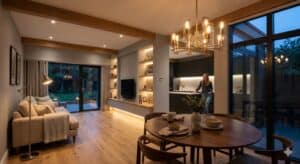
In rooms where family and friends gather, the central light fixture often serves as the anchor for the entire interior scheme. Replacing a generic flush-mount ceiling light with something more sculptural immediately gives a room character and depth. For instance, incorporating modern chandelier lamps above a dining table or in the centre of a living room draws the eye upward, highlighting ceiling height and adding a touch of contemporary elegance.
These statement fixtures act as functional art, bridging the gap between mere utility and premium interior design. When selecting a primary light source, consider the scale of your room. A large, open-plan space can handle a substantial, multi-tiered fixture, while a smaller room might benefit from a sleek, minimalist design that provides ample light without overwhelming the space. Designers frequently use these prominent pieces to establish the decorative theme for the rest of the house. For example, a sleek metallic fixture can reinforce an industrial aesthetic, whereas a glass or crystal piece leans into classic luxury. The material and finish of your chosen fixture should harmonise with other hardware in the room, such as door handles or cabinet pulls, for a cohesive finish.
The Practical Benefits of Modern Upgrades
While aesthetics are a crucial part of any redesign, updating your home’s lighting is also a highly practical decision that can drastically improve the energy efficiency of your property. If your home still relies on older halogen or incandescent bulbs, a renovation is the perfect time to make a permanent switch to sustainable alternatives.
According to the Department of Energy, modern LED light bulbs use up to 90% less energy than traditional incandescent bulbs and can last up to 25 times longer. This incredible efficiency means that investing in high-quality lighting at the start of your project will pay dividends over time. Beyond the financial savings, modern LEDs offer a much wider range of colour temperatures and are increasingly compatible with smart home systems. This allows homeowners to set schedules, adjust brightness via smartphone applications, and optimise their energy consumption even further without sacrificing style. Furthermore, upgrading your electrical framework during a renovation allows you to install dimmer switches and integrated smart controls without the hassle of retrofitting later. These technological additions provide unparalleled control over your home’s atmosphere, allowing you to seamlessly transition from a bright, active workspace during the day to a softly lit, intimate setting in the evening.
Essential Tips for Layering Light
Relying on a single overhead light is a common mistake in residential design. To create a truly inviting and adaptable environment, interior designers use a technique known as layering. This involves combining different light sources to eliminate harsh shadows and provide flexibility depending on the time of day or the task at hand.
To effectively layer light in your newly renovated rooms, try to incorporate the following three elements:
- Ambient lighting: This is your baseline illumination. It provides overall brightness to a room and typically comes from ceiling fixtures, recessed spotlights, or wall sconces.
- Task lighting: As the name suggests, these lights are highly focused and designed to help you complete specific activities. Think of under-cabinet lights in the kitchen, reading lamps in the bedroom, or adjustable desk lamps in a home office.
- Accent lighting: This adds drama and dimension to your space. Accent lights are used to highlight architectural features, artwork, or indoor plants. Picture lights, track lighting, or even LED strip lights placed strategically behind televisions or shelving units work perfectly for this purpose.
Planning for Long-Term Success
A successful home renovation requires more than just high-quality materials and skilled tradespeople. It demands a thoughtful approach to how each space will actually be used and experienced on a daily basis. By prioritising energy-efficient upgrades, investing in beautiful statement pieces, and mastering the art of layered illumination, you can ensure your home looks and feels spectacular long after the dust has settled. Take the time to plan your lighting scheme early in the renovation process, consult with experienced electricians, and you will reap the rewards of a perfectly lit, welcoming home for years to come.


How Nevada Rules Shape a Personal Injury Claim After a Crash

A Yard-Watering Plan: Match Soil, Plants, and Sprinklers Before You Turn On the Timer

A Practical Coastal Home Buying Checklist in Panama City, Florida

Piso Wifi 10.0.0.1 Pause Time – Complete Guide

High-Risk Threats Targeting Banks and How to Mitigate Them
