Home Improvement
A Yard-Watering Plan: Match Soil, Plants, and Sprinklers Before You Turn On the Timer
Key Takeaways
- Watering needs vary by soil type, sunlight, slope, plant type, and weather.
- Separate turf, beds, trees, and containers whenever their needs differ.
- Inspect sprinkler coverage regularly instead of assuming the controller is correct.
- Change schedules seasonally and pause irrigation after meaningful rainfall.
A healthy yard does not come from running every sprinkler zone longer. It comes from applying water where it is needed, at a rate the soil can absorb, and on a schedule that reflects current conditions. Understanding the basics of irrigation & sprinkler systems can help homeowners recognize when a timer setting, sprinkler head, or plant grouping needs attention.
Too much water can leave roots constantly saturated, encourage runoff, and create uneven growth. Too little water can stress turf, trees, shrubs, and flowers. The practical goal is not to follow one fixed routine, but to observe the landscape and make measured adjustments.
Why a Watering Plan Matters
A timer only controls when water starts and stops. It doesn’t confirm that water actually reaches the root zone, stays off pavement and sidewalks, or matches the specific needs of different plant types and soil conditions. Without that oversight, sprinklers can run efficiently on paper while missing their real purpose. A thoughtful plan accounts for slope, soil absorption rate, and plant grouping, reducing the risk of puddles, dry patches, overspray, and runoff before water has time to soak in.
Check the Yard Before Adjusting the System
Walk the property while each zone runs and again after it stops. Look for leaking heads, blocked nozzles, water on sidewalks, pooling near structures, bare turf, wilted plants, and runoff, and take note of any outdoor lighting fixtures that may be affected by overspray or standing water. Keep a screwdriver or soil probe, a straight-sided container, measuring tape, and a phone or notebook nearby to record what you find.
Match Water to Soil and Plant Needs
Plant selection, irrigation layout, and other landscape features should work together. For example, outdoor lighting layouts should be considered when planning bed edges and access points, so fixtures are not repeatedly soaked or hidden by plants that need frequent trimming.
Understand How Soil Responds
- Sandy soil: Water drains quickly, so shorter cycles may be more effective than a single long run.
- Clay soil: Water enters more slowly and may run off if sprinklers operate too long at once.
- Compacted soil: Water can remain near the surface rather than moving into the root zone.
- Mulched beds: Mulch can help limit surface evaporation, but emitters still need periodic checks.
Group plants with comparable needs whenever possible. Turf, flowering beds, shrubs, trees, containers, and drought-tolerant plants should not automatically share one schedule. This approach, often called hydrozoning, makes it easier to avoid giving one part of the yard too much water to support another.
Choose Methods and Build Zones
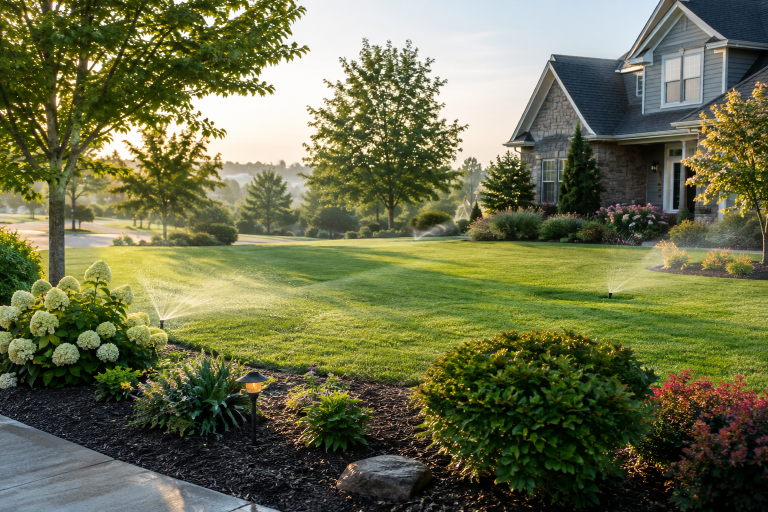
Different irrigation methods serve different purposes. Fixed spray heads can suit compact, regularly shaped turf. Rotary nozzles apply water more gradually and may help where runoff is a concern. Drip irrigation is often useful in planting beds, around shrubs, at tree root zones, and in containers. Soaker hoses can work in small beds, but they should be checked for clogs, kinks, and uneven wetting.
A balanced zone contains similar plants, similar sun exposure, and compatible sprinkler heads or emitters. Keep slopes separate from level areas, and do not combine drip emitters with spray heads on the same zone. Label valves and controller settings clearly so future adjustments do not become guesswork.
Set a Smarter Watering Schedule
Start with the shortest run time likely to wet the root zone, then inspect the soil before adding more water. If water begins to run off, use cycle-and-soak watering: run a brief cycle, let the surface absorb moisture, then run another short cycle if needed. Local watering restrictions can change, so check applicable municipal, county, utility, or water-management rules before relying on an automatic schedule.
Early morning watering generally gives plants time to take up moisture before the hottest part of the day. Check each zone by placing several straight-sided containers across the spray pattern. Uneven amounts in the containers can reveal poor coverage, a clogged nozzle, pressure problems, or misaligned heads. Guidance from the University of Florida’s lawn-watering recommendations also emphasizes adjusting irrigation seasonally and ensuring that water reaches the grass rather than the pavement.
Use Sensors and Smart Controllers Carefully
Rain sensors, soil-moisture sensors, flow monitors, and weather-based controllers can improve scheduling, but they cannot repair broken pipes or correct poor zone design. Before choosing a device, confirm controller compatibility, zone capacity, manual override options, power requirements, and whether it remains useful during an internet outage. Weather-based irrigation controllers use local weather and landscape conditions to tailor watering schedules rather than simply following a clock.
Troubleshooting and Seasonal Maintenance
Common Signs to Investigate
- Dry patches: Run the zone and look for blocked nozzles, low pressure, or gaps in coverage.
- Puddles: Check for excessive run time, compacted soil, drainage issues, or valves that do not close fully.
- Water on pavement: Adjust the spray direction, replace the nozzle, or correct a tilted head.
- Wilted plants despite watering: Check moisture below the surface, emitters, and possible root damage.
- A zone that will not start: Review the controller, valve area, wiring, and water supply before changing settings.
Seasonal Checklist
In spring, run every zone, clean filters, replace damaged heads, and verify controller dates. In summer, watch for runoff during longer cycles and review settings after rain or heat. In fall and winter, clear leaves from drainage areas, inspect storm-affected sections, replace weak batteries, and record repairs for future reference.
Final Takeaway
The best yard-watering plan is based on observation rather than on habit or a fixed calendar. Check the soil before watering, group plants by similar water needs, and choose the delivery method that suits each area, whether drip irrigation, sprinklers, or hand watering. Test coverage regularly to catch dry spots or overspray, and adjust schedules as seasons and weather change. Consistent maintenance helps prevent plant stress, runoff, and water waste, all without making the system unnecessarily complicated to manage.


How Concrete Contractors Near Me Can Save You Money on Modern Landscaping

How to Choose a Luxury SUV or Sedan That Fits Daily Life

How Nevada Rules Shape a Personal Injury Claim After a Crash

Piso Wifi 10.0.0.1 Pause Time – Complete Guide

High-Risk Threats Targeting Banks and How to Mitigate Them
