Crypto
ETH Prediction Deep Dive: What Technical Signals and Analyst Models Actually Show

Every few months, a fresh wave of investors types the same question into Google: where is ETH headed?
It’s a fair question — Ethereum isn’t just another token; it’s the infrastructure layer powering billions of dollars in decentralized applications, lending protocols, and tokenized assets.
But price forecasting in crypto is genuinely hard, and most articles either oversell the upside or bury the risks in fine print.
This guide cuts through the noise, walking you through what near-term technical signals are actually showing, what credible long-term models say, and — just as importantly — what could go wrong.
Reading the Near-Term Signals Without Getting Burned
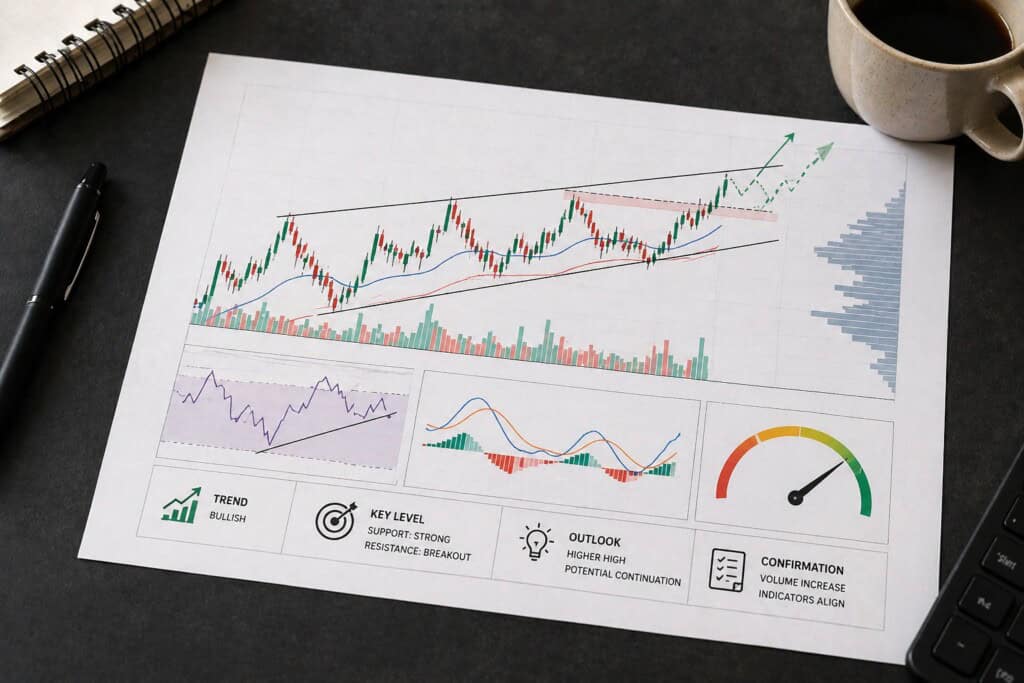
Picture Ethereum’s price chart like a highway during rush hour: traffic was moving fast, hit a wall, and now cars are bunched up waiting for a gap to open.
That’s roughly where ETH sits today — after touching an all-time high near $4,953 in August 2025, the price pulled back sharply and has been in a holding pattern since.
Technical tools like MACD and RSI-based oscillators can give you a directional read, but they’re lagging indicators — meaning they describe what already happened, not what’s about to happen.
What’s more telling is the ETH/BTC ratio: when ETH underperforms Bitcoin for extended stretches, it often signals that capital is sitting on the sidelines waiting for a catalyst before rotating back into Ethereum.
For anyone actively researching an ETH prediction right now, the honest takeaway is this — short-term direction hinges on whether ETH can reclaim key resistance zones, and that’s something only live chart data can answer in real time.
What Long-Term Models Actually Show for Ethereum
Zoom out to a five-year window and the picture shifts considerably.
Two of the more widely cited institutional forecasts — from VanEck and InvestingHaven — both converge around the $10,000–$12,000 zone as a realistic target before 2030, not as a moonshot scenario but as a base case grounded in network revenue growth and the expanding market for tokenized real-world assets.
Standard Chartered has revised its own ETH forecasts multiple times in both directions, which is itself a useful reminder: even well-resourced institutions don’t have a crystal ball.
The underlying thesis, though, remains consistent across most credible long-term models — if Ethereum holds its position as the primary settlement layer for decentralized finance, five-figure ETH before the end of the decade is a reasonable expectation rather than a fantasy.
Tracking where ETH trades right now relative to those targets can help you frame entry timing in a way that pure prediction articles rarely do.
How the Pectra Upgrade Changed Ethereum’s Fundamentals
Think of a city that just finished a major highway expansion — more lanes, better on-ramps, lower tolls.
That’s essentially what Ethereum’s Pectra upgrade delivered when it went live on May 7, 2025.
Three changes stood out: the maximum validator stake jumped from 32 ETH to 2,048 ETH (making institutional staking far more practical), account abstraction brought regular wallets closer to a Web2-style user experience, and expanded blob capacity pushed transaction costs lower on Layer-2 networks including Arbitrum, Optimism, and Base.
Cheaper, faster Layer-2 activity feeds directly back into demand for Ethereum’s base layer — more transactions mean more fees, and more fees mean more ETH burned through the EIP-1559 mechanism.
For long-term investors, technical upgrades like Pectra aren’t just engineering news; they’re the kind of fundamental improvements that make analyst price targets more defensible.
The Quiet Supply Story Behind ETH’s Price
Most price discussion focuses on demand — who’s buying, what institutions are allocating, whether ETF inflows are rising.
But Ethereum has a supply story that often gets overlooked, and it’s one of the more compelling structural arguments for the asset.
Roughly one-third of all circulating ETH is currently staked, which removes that supply from the open market entirely — it can’t be sold until validators choose to exit.
On top of that, the EIP-1559 fee-burning mechanism permanently destroys a portion of every transaction fee paid on the network.
During high-activity periods, more ETH gets burned than newly issued — meaning the total supply actually shrinks.
Stack a staking-driven supply reduction on top of a burn-driven issuance cut, and you have a structural setup where even modest increases in demand can produce outsized price moves.
Spot ETH ETFs — now live in the United States since mid-2024 — add a new institutional demand channel on top of that already-constrained supply picture.
The Risks That Don’t Make the Headlines Often Enough
A fair look at Ethereum’s price outlook has to spend real time on what could go wrong — not as a disclaimer, but as a genuine part of the analysis.
Regulatory risk is the most unpredictable variable: if major economies impose broad restrictions on staking yields or DeFi protocols, on-chain activity could contract meaningfully, taking demand for ETH with it.
Competition from faster, cheaper Layer-1 blockchains is a real ongoing pressure — Solana, Sui, and others continue to attract developers and users, and Ethereum’s dominance isn’t guaranteed by its history alone.
Bitcoin correlation is the risk most ETH holders feel most acutely: in sharp crypto downturns, ETH has historically fallen harder than BTC and taken longer to recover, which means drawdowns can be severe even when the long-term thesis remains intact.
Finally, broader macro factors — interest rate policy, equity market sentiment, global liquidity conditions — affect crypto markets regardless of Ethereum-specific fundamentals.
Holding both the bullish case and these risk factors in mind at the same time is what makes for clear-eyed investing rather than wishful thinking.
Conclusion
Ethereum’s near-term price direction is genuinely uncertain, but its long-term structural case is built on more solid ground than most crypto assets can claim.
The Pectra upgrade, the supply squeeze from staking and fee burns, growing institutional participation, and Ethereum’s continued dominance in DeFi all point in the same direction — but none of them eliminate the real risks that come with any crypto investment.
The investors who tend to do best are the ones who track the data consistently, understand what they’re buying, and size their positions to survive the volatility that comes with the territory.


How Nevada Rules Shape a Personal Injury Claim After a Crash

A Yard-Watering Plan: Match Soil, Plants, and Sprinklers Before You Turn On the Timer

A Practical Coastal Home Buying Checklist in Panama City, Florida

Piso Wifi 10.0.0.1 Pause Time – Complete Guide

High-Risk Threats Targeting Banks and How to Mitigate Them
