Tech Tips
Future Trends in Aircraft Inventory Management
Table of Contents
- Digital Twins Enhancing Predictive Maintenance
- 3D Printing Revolutionizing Spare Parts Production
- Blockchain Ensuring Supply Chain Transparency
- AI-Driven Forecasting Optimizing Inventory Levels
- Sustainability Initiatives in Inventory Management
- Global Supply Chain Visibility for Efficient Operations
- Conclusion
The aviation industry is undergoing rapid transformation in how it manages parts, components, and critical supplies. As global fleets continue to expand and airline networks reach more destinations, inventory management is becoming increasingly complex and requires sophisticated solutions. The demand for more innovative, data-driven approaches to aircraft inventory management is intensifying as carriers strive to optimize costs, improve operational efficiency, and maintain high safety standards. Innovative digital tools and automation are beginning to define the future of this essential function, promising unmatched efficiency, transparency, and sustainability for both airlines and maintenance organizations. Leveraging the latest advancements, companies can optimize their existing processes, not only supporting daily operations but also enabling long-term growth and resilience in a highly competitive and regulated field.
Cutting-edge technologies such as digital twins and 3D printing are revolutionizing aviation inventory logistics, enhancing agility and responsiveness to market changes and maintenance needs. The COVID-19 pandemic and geopolitical challenges have highlighted the weaknesses of traditional inventory practices, prompting a shift toward advanced digital solutions to ensure fleet readiness, extend asset life, and reduce costs and environmental impact. Airlines are increasingly compelled to adopt sustainable practices that encompass waste reduction and lifecycle management, fulfilling regulatory and environmental expectations while enhancing operational efficiency. Trust, efficiency, and transparency are now central to how organizations manage aircraft parts and supplies, making advanced inventory management crucial for competitive advantage in modern aviation.
Digital Twins Enhancing Predictive Maintenance
Digital twins, or advanced virtual replicas of real-world assets, are revolutionizing predictive maintenance strategies across the aviation sector. By creating highly detailed, live digital representations of engines, landing gear, avionics, and other critical components, maintenance teams can continuously monitor key health metrics and simulate the effects of wear, tear, and stress in real time. This data-driven approach moves organizations beyond reactive or scheduled maintenance into a predictive paradigm, where interventions are planned exactly when needed, minimizing service disruptions and optimizing asset utilization. For example, global industry leaders like Rolls-Royce and General Electric leverage digital twin technology not only to forecast when maintenance will be needed but to optimize operational usage, thereby reducing unexpected breakdowns, delaying costly overhauls, and maximizing the overall lifespan of aircraft parts. The use of digital twins results in a significant reduction in unnecessary downtime, improves reliability, and enables the entire inventory and supply chain to function with greater accuracy and responsiveness.
3D Printing Revolutionizing Spare Parts Production
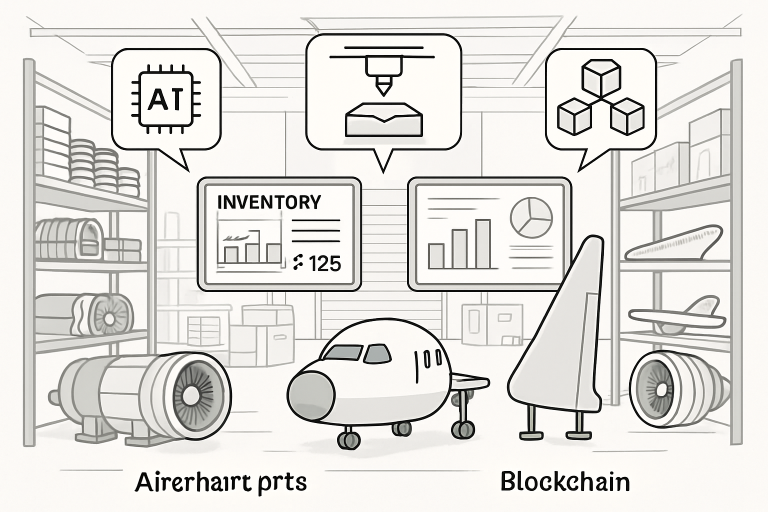
The introduction of 3D printing, also known as additive manufacturing, has been a transformative force in how the aviation sector produces and sources spare parts. Unlike traditional manufacturing, which requires lengthy lead times, massive molds, and significant storage capabilities, 3D printing allows aviation maintenance and repair organizations to fabricate intricate parts on demand, directly from digital blueprints. Leading OEMs such as Airbus have already demonstrated the value of 3D printing by incorporating more than 1,000 3D-printed parts into their A350 model, improving weight efficiency and enabling rapid replacements. The ability to produce lightweight yet strong cabin elements, brackets, hinges, and even structurally critical spares has reduced shipping delays and improved the industry’s agility in responding to unexpected repair needs. In particular, this flexibility is essential during supply chain interruptions, geopolitical turbulence, or urgent aircraft-on-ground (AOG) events, when having immediate access to parts is paramount for minimizing costly downtime.
Blockchain Ensuring Supply Chain Transparency
Blockchain technology is emerging as a powerful enabler of unprecedented trust and accountability across the aerospace supply chain. With its decentralized, immutable ledger, blockchain provides a tamper-proof digital trail to certify the origin, ownership, and movement of every aircraft part or component. By recording each transaction, from manufacturer to installer, blockchain platforms ensure every stakeholder can instantly verify the authenticity, maintenance records, and regulatory compliance of any given item. Solutions like Honeywell’s GoDirect Trade have proven effective at combating counterfeit or unauthorized parts, which have historically posed significant safety and compliance risks in aviation. Blockchain-powered systems drastically simplify audits, expedite customs processes, and reduce friction among buyers, sellers, leasing companies, and authorities. As regulatory oversight continues to tighten, such transparency is quickly becoming a requirement rather than an option for supply chain participants, helping ensure safer, more resilient aviation networks worldwide.
AI-Driven Forecasting Optimizing Inventory Levels
Artificial intelligence (AI) is transforming inventory management by providing highly scientific, data-backed demand forecasting capabilities. Using sophisticated algorithms, AI can analyze extensive historical trends in usage, failure rates, repair cycles, and flight operations data, generating forecasts that enable organizations to anticipate exactly what parts will be needed and precisely when. This predictive approach allows airlines and MROs to move away from costly, static inventory models to just-in-time stocking strategies that minimize surplus, reduce shortages, and free up working capital. Direct benefits include significant cost savings, reduced warehouse space requirements, and reduced “aircraft on ground” (AOG) scenarios, which can cost hundreds of thousands of dollars per hour in lost productivity. AI-driven inventory systems can also perform complex scenario analyses, helping maintenance planners make better decisions amid dynamic operating conditions and rising global uncertainty.
Sustainability Initiatives in Inventory Management
Environmental stewardship is no longer optional for airlines and their partners; it is quickly becoming a core operational imperative. The aviation sector is increasingly adopting sustainability initiatives ranging from efficient parts recycling and refurbishment to the use of eco-friendly materials in supply chains. Airlines like Delta Air Lines, which has recycled over 900,000 pounds of leather from retired seats, are demonstrating the feasibility and profitability of circular economy models. Such efforts not only divert material from landfills but also create new revenue opportunities by supplying the secondary market with refurbished, certified parts. Other initiatives include investing in digital inventory tracking, which enables precise recycling and reduction of obsolete stock, and collaborating with suppliers to develop greener production processes. These efforts ensure that operational improvements deliver long-term value while supporting the industry’s overarching ecological and regulatory commitments.
Global Supply Chain Visibility for Efficient Operations
Modern aircraft fleets require real-time, end-to-end visibility across highly dispersed global supply chains. This requirement has driven the adoption of integrated tracking, advanced IoT sensors, and centralized data platforms that offer complete transparency at every stage of a part’s journey, from supplier to warehouse, through customs, and all the way to final installation. These innovations ensure that airlines and maintenance teams always know precisely where each part is, anticipate delays before they impact schedules, and respond swiftly to bottlenecks by rerouting logistics or sourcing alternatives. Such visibility helps organizations maintain robust maintenance schedules, minimize costly groundings, and prevent unwarranted stockpile accumulation. Ultimately, strong supply chain visibility enhances organizational agility, worker productivity, and customer satisfaction, laying a foundation for continuous operational improvement.
Conclusion
The future of aircraft inventory management is being shaped by relentless digital transformation and the growing adoption of sustainable practices. By embracing advanced technologies like digital twins, 3D printing, blockchain, and artificial intelligence, forward-thinking industry players are positioning themselves to meet evolving market demands and adapt to volatility in global supply chains. These innovations are more than just operational upgrades; they are strategic investments that offer measurable gains in efficiency, reliability, and compliance, while also supporting the broader environmental and regulatory goals shaping modern aviation. Embracing these trends enables organizations to stay competitive and deliver excellence in an ever-evolving landscape.


How Nevada Rules Shape a Personal Injury Claim After a Crash

A Yard-Watering Plan: Match Soil, Plants, and Sprinklers Before You Turn On the Timer

A Practical Coastal Home Buying Checklist in Panama City, Florida

Piso Wifi 10.0.0.1 Pause Time – Complete Guide

High-Risk Threats Targeting Banks and How to Mitigate Them
