Construction
Why Construction Companies Stay Busy but Run Short on Cash
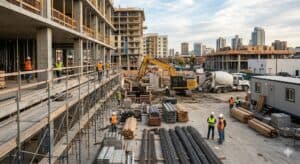
Walk onto almost any active construction site and the signs of activity are obvious.
Materials are arriving. Trades are moving between tasks. Project managers are coordinating subcontractors. Equipment is operating. Schedules are being updated.
From the outside, the business appears healthy.
Yet behind the scenes, many construction companies are experiencing a very different reality. Despite full project pipelines and growing revenue, cash remains under constant pressure.
This disconnect between activity and liquidity is one of the defining operational challenges of the construction industry.
It also creates an important misconception.
Many people assume cash flow problems are primarily caused by a lack of work. In construction, the opposite is often true. The busiest periods can place the greatest strain on cash reserves.
This is not simply a finance issue. It is a structural feature of how construction projects are delivered, invoiced, approved, and paid.
Understanding why construction businesses stay busy but run short on cash requires looking beyond the balance sheet and into the operational realities that shape the industry’s financial performance.
The Construction Industry’s Growth Paradox
In many industries, more work generally means more cash.
Construction operates differently.
Winning a major project often requires significant upfront expenditure long before payment is received.
Labour costs begin immediately.
Materials must be ordered.
Equipment is hired.
Subcontractors require payment.
Insurance, compliance, and project mobilisation costs accumulate rapidly.
Meanwhile, revenue often remains tied to milestone payments, progress claims, certification processes, and customer approval cycles.
The result is an operational contradiction that many construction leaders know all too well:
Growth creates revenue, but growth can also increase financial pressure.
A company that secures multiple new projects simultaneously may actually experience greater cash flow stress than it did during slower periods.
As counterintuitive as it sounds, success can become expensive.
Revenue and Cash Are Not the Same Thing
One of the most common traps in construction is confusing invoiced revenue with available cash.
A project may appear profitable on paper while placing significant strain on working capital.
Consider a contractor managing three large commercial projects.
Monthly invoices are being issued on schedule.
Revenue targets are being met.
Project teams are performing well.
Yet payment approvals may take weeks or months to move through the client’s internal processes.
In some cases, invoices are held up by minor documentation issues, incomplete variations, certification delays, or approval bottlenecks.
The business continues operating while waiting for cash that technically already belongs to it.
This creates a reality that many construction operators recognise immediately:
The business is not waiting for work.
The business is waiting for payment.
That distinction changes everything.
The Hidden Cost of Payment Delays
Construction businesses often focus heavily on project margins.
However, cash flow is frequently influenced more by payment timing than profitability.
A project delivering a healthy margin can still create operational problems if payment arrives significantly later than expected.
Every delayed payment triggers secondary consequences.
Subcontractors still need to be paid.
Suppliers continue issuing invoices.
Payroll obligations remain unchanged.
Future projects require investment.
The financial impact extends beyond the original invoice.
What appears to be a customer payment issue quickly becomes a business-wide working capital challenge.
This explains why many experienced construction executives spend considerable time discussing collections, debtor management, and cash forecasting despite leading technically successful businesses.
They understand a simple truth:
“Cash flow problems rarely start when invoices become overdue. They often start when businesses become comfortable waiting.”
The Complexity of Construction Payment Chains
Construction rarely involves a simple transaction between buyer and seller.
Most projects involve multiple stakeholders.
Developers.
Builders.
Contractors.
Subcontractors.
Consultants.
Quantity surveyors.
Procurement teams.
Project managers.
Each participant introduces another layer of communication and approval.
An invoice may pass through multiple decision-makers before payment is authorised.
This complexity creates delays that are often procedural rather than intentional.
Many late payments occur because paperwork is incomplete, approvals are pending, project variations remain unresolved, or internal workflows have stalled.
The challenge for finance teams is that these delays rarely appear visible from within accounting systems.
The invoice exists.
The amount is correct.
Yet payment remains outstanding.
What is missing is visibility into the operational process surrounding the payment.
Variation Work Creates Financial Friction
Few industries deal with contractual complexity quite like construction.
Projects evolve.
Scope changes.
Specifications shift.
Unexpected site conditions emerge.
Additional work is requested.
Variations become unavoidable.
While variation work can increase project value, it often introduces significant financial friction.
Documentation requirements become more complicated.
Approvals take longer.
Disputes emerge over scope interpretation.
Invoices become more difficult to process.
Many construction businesses underestimate how much cash flow pressure originates from variation management rather than project execution itself.
The challenge is not performing the work.
The challenge is ensuring the commercial process keeps pace with operational delivery.
Why Finance Teams Often Become Project Investigators
An interesting behavioural pattern emerges inside growing construction businesses.
Finance teams gradually become investigators.
Rather than simply processing transactions, they spend increasing amounts of time tracking information across projects.
They chase project managers for updates.
They follow up on disputed invoices.
They clarify variation approvals.
They investigate payment delays.
They coordinate conversations between clients, site teams, and operations managers.
This creates an important operational insight.
Many debtor management challenges are not finance problems.
They are communication problems.
The biggest bottlenecks are often coordination problems, not effort problems.
Adding more finance staff may increase capacity, but it does not necessarily remove the underlying source of the delay.
The Technology Gap Between Site Operations and Finance Operations
Construction has embraced technology in many areas.
Project management platforms have become more sophisticated.
Scheduling tools have improved.
Digital site reporting is increasingly common.
Building information modelling continues to evolve.
Yet financial workflows often remain surprisingly manual.
Invoice follow-ups are managed through email.
Collection activities rely on spreadsheets.
Payment tracking depends on individual knowledge.
Customer communication becomes fragmented across multiple systems.
This creates a disconnect between operational visibility and financial visibility.
Many businesses can track project progress in real time but struggle to understand the status of receivables with the same level of clarity.
As construction firms continue investing in operational technology, attention is increasingly shifting toward financial workflow automation.
Increasingly, construction firms are adopting an accounts receivable platform to reduce manual follow-up activity, improve consistency in customer communication, and gain greater visibility into outstanding payments.
Importantly, the objective is not simply automation for its own sake.
The objective is creating predictable cash flow processes that scale alongside project growth.
The Psychology of Chasing Payments
One aspect of construction finance receives surprisingly little attention.
Many businesses are reluctant to pursue payment aggressively because they fear damaging commercial relationships.
This concern is understandable.
Construction is relationship-driven.
Future projects often depend on maintaining goodwill.
No contractor wants to jeopardise future opportunities over a collections dispute.
However, this creates a psychological tension.
Finance teams are expected to protect cash flow.
Commercial teams are expected to protect relationships.
Sometimes these objectives appear to conflict.
The most effective businesses recognise that professional debtor management does not need to be confrontational.
Clear communication, consistent processes, and proactive follow-up often improve customer relationships because expectations become more transparent.
The real risk is inconsistency.
Customers become frustrated when communication is sporadic, unclear, or reactive.
Operational Maturity Matters More Than Revenue Growth
One of the most important lessons in construction is that growth alone does not create resilience.
Many businesses mistake activity for operational maturity.
Winning more work does not automatically improve cash flow.
Hiring more people does not automatically improve collections.
Increasing revenue does not automatically strengthen working capital.
In fact, growth often exposes operational weaknesses that smaller teams could previously absorb.
Processes that worked when managing ten projects may fail when managing fifty.
Communication methods that worked with a small customer base become unsustainable at scale.
What appears to be a cash flow problem is often a process scalability problem.
The distinction matters because the solutions are different.
Conclusion
Construction companies rarely struggle because they lack work.
More often, they struggle because operational complexity grows faster than cash flow systems evolve.
Long payment cycles, fragmented approval processes, variation disputes, communication gaps, and manual debtor management all contribute to financial pressure.
The irony is that some of the busiest businesses in the industry can also be the most vulnerable to cash flow disruption.
As project volumes increase, the ability to manage working capital effectively becomes just as important as winning new contracts.
For many construction firms, improving visibility, consistency, and financial workflow discipline ultimately creates more value than simply generating additional revenue. Increasingly, businesses are turning to accounts receivable platform and other automation tools not because they have a collections problem, but because they recognise that sustainable growth depends on turning completed work into predictable cash flow.


How Nevada Rules Shape a Personal Injury Claim After a Crash

A Yard-Watering Plan: Match Soil, Plants, and Sprinklers Before You Turn On the Timer

A Practical Coastal Home Buying Checklist in Panama City, Florida

Piso Wifi 10.0.0.1 Pause Time – Complete Guide

High-Risk Threats Targeting Banks and How to Mitigate Them
